


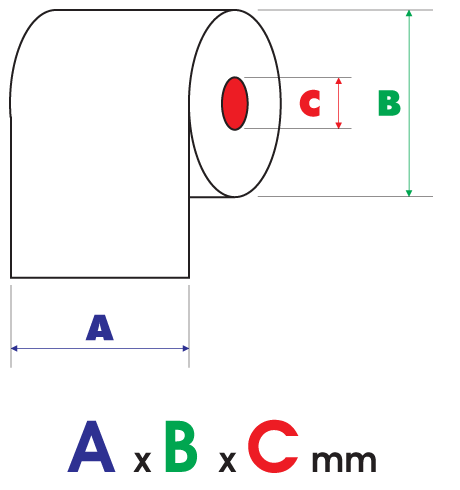
Is Receipt Paper Safe? Thermal Paper, BPA and Your Health
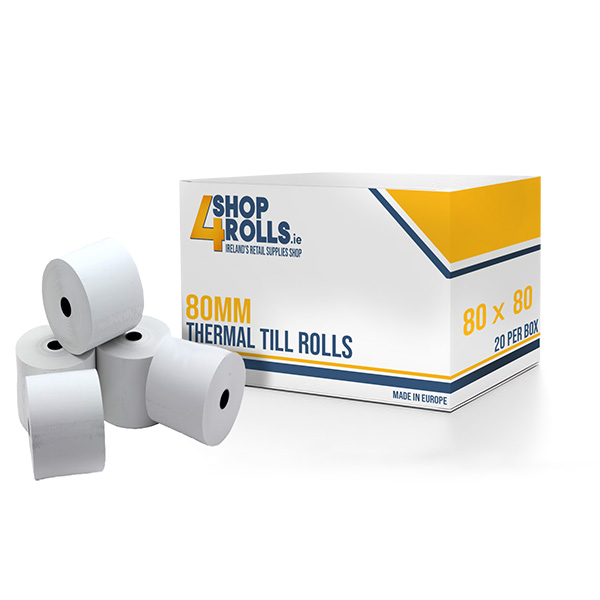
Is receipt paper safe? For a customer taking the odd receipt, the health risk is very low. The real question is about thermal paper's chemical coating, which historically used BPA (bisphenol A) as a colour developer. Since 2 January 2020, EU law bans BPA in thermal till rolls, so new receipts sold in Ireland are BPA-free. The remaining concern is mainly for retail staff who handle receipts all day, and sensible handling, plus choosing phenol-free rolls, removes most of it.
What is thermal receipt paper made of?
A thermal receipt is not printed with ink. The paper carries a thin coating on its print side made of two main ingredients: a colourless leuco dye and a colour developer. When the print head heats a tiny spot, the two react and turn black, which is how the text appears. That is what makes thermal printing fast, quiet and ribbon-free, and it is why there is nothing to replace but the roll. For the full mechanism, see why do receipts fade and the parent guide, till rolls explained.
The colour developer is where the safety debate sits. For decades the most common developer was bisphenol A (BPA), the same compound that prompted "BPA-free" labelling on water bottles and food packaging. It does its job well, but it is the part of a receipt people ask about.
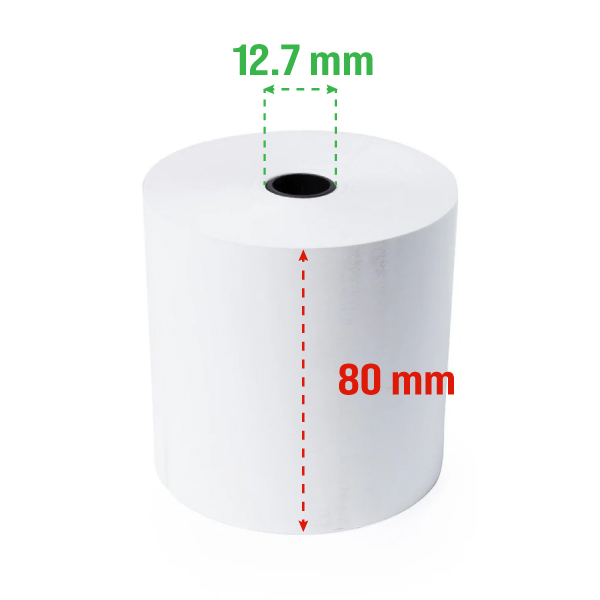
Is the BPA in receipt paper dangerous?
BPA is an endocrine disruptor: at sufficient exposure it can mimic the hormone oestrogen and interfere with the body's hormonal system. That is why regulators have steadily limited it in food-contact materials. On a receipt, the BPA is not chemically bound into the paper, it sits loose in the surface coating, so it can rub onto skin and other surfaces. For most people the day-to-day dose from the occasional receipt is small, but the concern was real enough for the EU to act on it.
The exposure that drew attention was not eating receipts, it was simply touching them. Which brings us to the most important point for an Irish business.
Are receipts in Ireland still made with BPA?
No, not legally. Under EU rules (REACH Annex XVII, entry 66), since 2 January 2020 thermal paper containing BPA at or above 0.02% by weight cannot be placed on the EU market. Ireland follows this, so any thermal till or card roll sold here today should be BPA-free. The receipts most likely to still contain BPA are old ones printed before 2020, or rolls imported from outside the EU.
This is the single fact that changes the answer for most readers. The "receipts are full of BPA" warnings that circulate online date from before the ban. If you buy your rolls from an Irish or EU supplier, the BPA question is largely settled by law. What replaced it is the next thing worth understanding.
For retailers: if you want this in writing for staff or an audit, ask your supplier to confirm the rolls are BPA-free and, ideally, phenol-free. We cover what to look for in does receipt paper contain BPA and what is BPA-free thermal paper.
What about BPA-free and BPS receipt paper?
When BPA was phased out, many manufacturers switched to BPS (bisphenol S), a chemically similar developer. BPS is not currently banned in thermal paper, but it is structurally close to BPA, it is also considered an endocrine disruptor, and it is under regulatory review. So "BPA-free" is an improvement, but it does not always mean "bisphenol-free".
The cleaner option is phenol-free thermal paper, which uses a different class of developer entirely (such as Pergafast-type or other non-phenolic chemistries). If your priority is removing the whole question for staff who handle receipts constantly, phenol-free is the one to ask for.
| Roll type | Developer used | What it means for you |
|---|---|---|
| Old BPA thermal | Bisphenol A (BPA) | Banned in the EU since 2020; only on pre-2020 or non-EU rolls |
| BPA-free thermal | Often BPS, sometimes other | No BPA; BPS is similar and under review |
| Phenol-free thermal | Non-phenolic developer | Avoids BPA and BPS; the cleanest mainstream option |
Who is most at risk from thermal paper?
The highest exposure is occupational, not from being a shopper. Cashiers and retail staff who handle hundreds of receipts a shift, and anyone who holds receipts after using hand sanitiser or hand cream, absorb more, because those products help the chemical pass through skin. Research before the ban found cashiers had higher BPA levels than the general public. With EU thermal paper now BPA-free, that risk is much reduced.
As a precaution, the groups usually advised to minimise handling are people who are pregnant and those who handle receipts all day. The practical steps below matter most for them.
How to handle receipts safely
Now that EU thermal paper is BPA-free, gloves are not normally needed. The most useful habits are simple: do not apply hand sanitiser or hand cream right before handling receipts, wash your hands before eating, do not crumple or chew receipts, and keep them out of children's reach. For a workplace, the most effective single step is switching to phenol-free rolls.
- Mind the order of tasks. Sanitiser and lotion increase skin absorption, so handle receipts before applying them, not after.
- Wash hands before food breaks. A basic habit that removes most surface residue.
- Do not store loose receipts against skin for long periods, and keep them away from young children.
- Go digital where you can. Email or no-receipt options cut paper handling and waste.
- Buy BPA-free or phenol-free rolls. The cleanest fix, applied once at purchasing.
Can you recycle thermal receipt paper?
No. Thermal receipts should go in your general waste bin, not the recycling. The heat-sensitive chemical coating contaminates the paper recycling stream, and small receipts are hard to sort, so they are treated as a contaminant. Ireland's official MyWaste guidance is to put receipts in general waste, even BPA-free ones. Plain paper and card, by contrast, recycle normally.
This often surprises people, because a receipt looks like ordinary paper. The coating is the difference. We go into disposal and the greener alternatives in are thermal till rolls recyclable and is BPA-free thermal paper recyclable.
Do thermal receipts fade, and is that a safety issue?
Fading is a separate property of the same coating, not a health issue. Because the image is formed by heat-reactive chemistry, heat, sunlight, friction and contact with some plastics will darken or wipe a receipt over time, which is why a receipt left in a hot car turns black or blank. It typically stays legible for one to three years if kept cool and dark. For records you need to keep, photograph or scan them. Full detail in how long do thermal receipts last and why do receipts fade.
Choosing safer till rolls for your business
For any Irish business the answer is straightforward. Every thermal roll sold legally here today is already BPA-free, so you are starting from a safe baseline. If you want to go further, especially for staff handling receipts all shift, ask for phenol-free rolls and keep a supplier confirmation on file. The change is invisible to customers and costs little, but it removes the question entirely.
BPA-free thermal till rolls, delivered across Ireland
Every common size of thermal till and card roll at trade prices, BPA-free in line with EU rules. Ask us about phenol-free options for high-handling tills.
Not sure which roll your machine takes? Start with the full till roll range, or read till rolls explained and thermal vs plain paper till rolls.
Frequently asked questions
Is receipt paper toxic?
Receipt paper is not toxic to touch occasionally. The concern is the chemical developer in thermal paper, historically BPA, which is an endocrine disruptor. Since January 2020, EU law bans BPA in thermal till rolls, so new receipts in Ireland are BPA-free. Sensible handling still makes sense for staff who touch receipts all day.
Does receipt paper still contain BPA in Ireland?
No, not legally. Since 2 January 2020, EU rules ban thermal paper containing BPA at or above 0.02% by weight from being sold in the EU, including Ireland. New till and card receipts here are BPA-free. Older receipts printed before 2020, or non-EU imports, may still contain it.
Can BPA from a receipt get into your body through your skin?
Yes. Studies show BPA can transfer from thermal paper to the skin and be absorbed, and hand sanitiser or hand cream increases how much gets through. This is why cashiers historically showed higher BPA levels. With BPA now banned in EU thermal paper, this exposure route is greatly reduced.
Is BPA-free thermal paper safe?
BPA-free thermal paper removes BPA, but some types replace it with BPS, a similar chemical that is also under review. The cleanest option is phenol-free thermal paper, which uses a different developer entirely. For everyday handling, BPA-free rolls are a clear improvement, and phenol-free goes one step further.
Can you put thermal receipts in the recycling bin?
No. Thermal receipts should go in your general waste bin, not the recycling. The heat-sensitive chemical coating contaminates the paper recycling stream, and the receipts are usually too small to sort. Ireland's official MyWaste guidance is to put receipts in general waste, even BPA-free ones.
Should cashiers wear gloves to handle receipts?
Gloves are not usually necessary now that EU thermal paper is BPA-free. Simple steps lower exposure further: avoid using hand sanitiser or cream right before handling receipts, wash hands before eating, and do not crumple receipts. Switching to phenol-free rolls is the most effective long-term step.