


Till Roll Sizes Explained: 44mm, 57mm, 76mm and 80mm
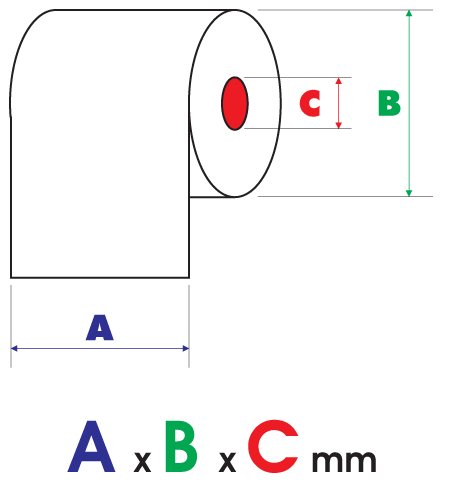
Till roll sizes are written as three numbers in millimetres: paper width, roll diameter, then core. Width is the paper across the roll, diameter is how fat the full roll is, and the core is the centre hole, usually 12.7mm. The common sizes are 80 x 80mm, 57 x 40mm and 44 x 70mm.
What do the numbers on a till roll mean?
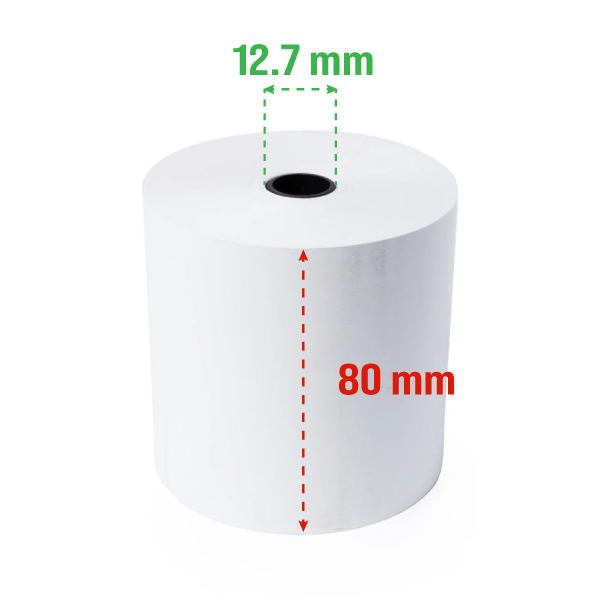
The numbers are measurements in millimetres, always in the same order: width, then diameter, then core. Width is how wide the paper is across the roll. Diameter is how big the full roll is from edge to edge. Core is the hole in the middle, usually 12.7mm.
So a roll sold as 80 x 80 x 12.7mm is 80mm of paper width, 80mm across the finished roll, on a 12.7mm core. Plenty of shops write the size with only two numbers, like 57 x 40mm. When the third number is missing it is almost always a 12.7mm core.
Width is the number that decides whether the roll works at all. Your printer holds the paper between two guides and prints across a fixed head. Too wide and the roll will not drop into the bay. Too narrow and the paper wanders, so the print sits crooked or the receipt tears.
Diameter is about how long the roll lasts, not whether it fits, with one catch. A bigger diameter means more paper and fewer roll changes, but only up to the size of your paper bay. If the bay is built for a 40mm roll, a 50mm roll will not close the lid.
What are the most common till roll sizes?
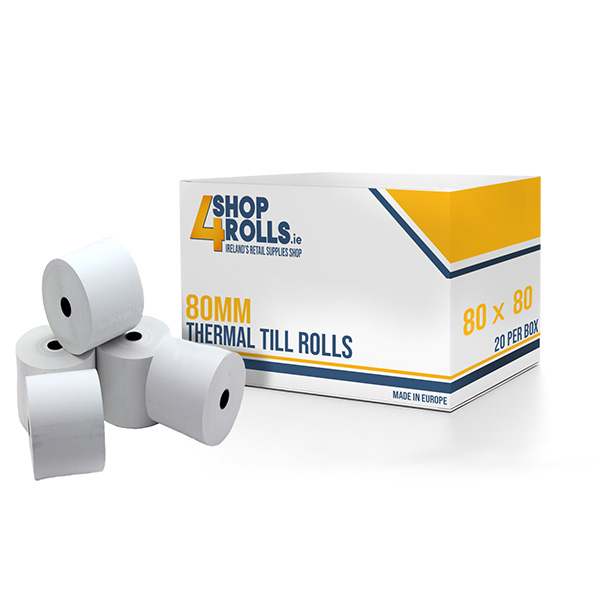
Four widths cover nearly every machine in Irish retail. 80mm is the standard for modern tills and receipt printers. 57mm is the card machine width. 76mm is used by older impact and kitchen printers. 44mm turns up in many older tills and small counter machines.
Here is how the widths break down in practice.
| Size (W x Dia x Core) | Type | Typically fits |
|---|---|---|
| 80 x 80 x 12.7mm | Thermal | Most modern tills and receipt printers |
| 57 x 40 x 12.7mm | Thermal | The standard card machine or PDQ roll |
| 57 x 30mm | Thermal | Smaller and contactless card terminals |
| 57 x 25mm | Thermal | Compact handheld terminals with a shallow bay |
| 44 x 70 x 12.7mm | Plain or thermal | Many older tills |
| 76 x 70mm (2-ply) | Carbon | Kitchen and impact printers |
The 80 x 80mm thermal roll is the one most shops reorder week in, week out. It is the default for modern receipt printers, it holds a long run of paper, and it is stocked everywhere. If you are fitting out a new till and you get to choose, 80 x 80mm is the easy pick. See the thermal till roll range for the full list.
Why the 57mm sizes are listed separately
The 57mm widths in the chart are the card machine family. Width stays at 57mm across the main terminal brands, so the second number, the diameter, is the only thing that changes from one terminal to the next. That is why you see 57 x 40mm, 57 x 30mm and 57 x 25mm sold side by side.
Which of the three you need depends on your terminal rather than on the size chart, so that question is answered by machine in how to find the right till roll for your machine and in the guide to card machine rolls. This guide stays on what the numbers mean and how to read them off a roll.
How do you measure a till roll you already have?
Take the old roll out and measure it with a ruler. Measure the paper width across the end of the roll first, then the diameter across the full circle of paper, then the hole in the middle. Round each one to the nearest whole millimetre and match it to a standard size.
Three easy routes, quickest first:
- The old box. The size is printed on it. Reorder the same and you are done.
- The machine. Many tills and printers list the roll size in the manual, or on a sticker inside the paper bay.
- The ruler. Width, then diameter, then core. The core is almost always 12.7mm.
If the old roll is half used, the diameter reading will be too small. Measure the width only, then pick the standard diameter that fits your bay. A part-used roll still tells you the width, and width is the number that matters most.
Only know the make and model of your machine? The guide to finding the right till roll for your machine matches rolls to the common till and terminal brands.
Every common till roll size, in stock
80mm, 76mm, 57mm and 44mm rolls in thermal, plain paper and 2-ply, at trade prices with fast Irish delivery from our Cavan warehouse.
What happens if you order the wrong size?
A roll that is too wide will not sit in the paper bay, so it is a straight return. A roll that is too narrow does fit, and that is the trap. The paper slides side to side as it feeds, so the print drifts off centre, the edges crease, and receipts jam more often. Staff blame the printer when the roll is the problem.
Diameter errors are gentler. A roll that is too fat stops the lid closing, which you notice straight away. A roll that is smaller than your bay works fine, it just runs out sooner and costs you more roll changes over a week.
The safe habit is to keep one empty box from your current size on the shelf. When stock runs low, read the size off the box and reorder. It takes ten seconds and removes the guesswork.
Which size should you buy for your business?
Buy the size your machine already takes, in the largest diameter your paper bay will hold. That gives the fewest roll changes for the same money. A busy shop till usually means 80 x 80mm thermal, a card terminal means 57 x 40mm, and a kitchen printer means 76 x 70mm 2-ply.
Most counters need two sizes rather than one, because the till and the card machine are separate machines. Order both together and keep a spare box of each under the counter. Running out of card machine rolls mid-service is the one that hurts.
Buying by the box lowers the cost per roll, and the standard sizes are the cheapest per roll because they move fastest. There is more on that in how much do till rolls cost, and the wider picture on types and printing is in the till rolls buyer's guide.
Frequently asked questions
What do the three numbers on a till roll mean?
The three numbers are measurements in millimetres, always in the order width, diameter, core. Width is the paper width across the roll, diameter is the size of the full roll, and core is the hole in the middle. A roll sold as 80 x 80 x 12.7mm is 80mm wide, 80mm across, on a 12.7mm core.
What is the most common till roll size?
80 x 80mm thermal is the most common till roll size, used by most modern tills and receipt printers. Card machines are the other common case, and they take 57mm wide rolls, usually 57 x 40mm. Older tills often take 44 x 70mm instead.
What is the difference between 57 x 40mm and 57 x 30mm rolls?
Only the diameter differs. Both are 57mm wide, so the paper feeds the same way, but the 40mm roll holds more paper and so needs changing less often. The 30mm roll is the one to choose when the paper bay is shallow and a fatter roll stops the lid closing properly.
How do I measure a till roll?
Take the roll out and use a ruler. Measure the paper width across the end of the roll, then the diameter across the full circle, then the hole in the middle. Round to the nearest millimetre and match it to a standard size. The core is almost always 12.7mm.
What is the core size on a till roll?
The core is the hole through the middle of the roll and it is almost always 12.7mm. Because it rarely changes, many sellers list only two numbers, such as 57 x 40mm. If no core is stated, assume 12.7mm unless your printer says otherwise.
Can I use a narrower till roll than my printer needs?
You can fit it, but it causes problems. A narrow roll slides side to side as it feeds, so the print sits off centre, the edges crease and the paper jams more often. Match the width to your printer, and only vary the diameter to suit your paper bay.