


Are Paper Coffee Cups Recyclable? The Truth About the Plastic Lining
Paper coffee cups are recyclable, but not in ordinary paper recycling. The thin plastic lining that keeps them waterproof has to be stripped off at specialist facilities, so most kerbside and office bins cannot take them. Put used cups in general waste unless your collector says otherwise.
Why are paper coffee cups not recyclable in the normal bin?
Paper cups carry a very thin plastic lining on the inside. That lining is what stops hot coffee soaking through the board. Standard paper recycling pulps paper in water, and the plastic film will not break down in that process, so a normal mill cannot handle cups. They need a plant that separates the two layers first.
Think of the cup as two materials glued together. The board is good, clean fibre that mills want. The lining is a plastic film far too thin to peel away by hand. On its own each material is recyclable. Stuck together, they are a problem for the machinery most recycling depends on.
There is a second issue as well. Cups arrive wet, with coffee, milk and sugar in them. Wet, dirty paper is a contaminant in a paper bale even before you get to the lining. That is why bin guidance so often says "no cups" without explaining any further. More on the lining itself is in do paper cups contain plastic, PFAS or microplastics.
Can paper cups be recycled at all?
Yes. Specialist facilities exist that pulp the board and peel the plastic film away, so the fibre goes back into the paper stream and the plastic is handled separately. The catch is access. Those plants are far fewer than ordinary paper mills, so a cup only gets recycled if it reaches one, through a dedicated cup collection.
Some large chains and offices run cup take-back schemes that feed those plants. If your business gets through a high volume of cups, it is worth asking your waste contractor whether a separate cup stream is available in your area. For a small cafe, it usually is not, and general waste is the honest answer.
What should my cafe do with used cups?
Ask your waste collector first, because rules vary by contractor and county. Unless they tell you they take cups, used cups go in general waste. Do not put them in the paper bin hoping for the best. One tray of wet, lined cups can taint an otherwise clean load of paper.
- Ask your collector whether they run a separate cup stream. Get it in writing so staff have a clear rule.
- Separate the lids. Plastic lids go with your plastics, not with the cup.
- Empty the liquid before binning. Wet waste is heavier and messier for everyone.
- Label your bins so customers and staff do the same thing every time.
- Offer a discount for reusable cups. The cup you never use is the cheapest one to deal with.
| Item | Where it goes | Why |
|---|---|---|
| Used paper cup | General waste, unless a cup stream is offered | Plastic lining plus liquid contamination |
| Plastic lid | Plastics, rinsed | Single material, widely accepted |
| Cardboard cup sleeve | Paper and card | Plain board, no lining |
| Cup carrier tray | Paper and card | Plain moulded board |
| Compostable cup | Commercial composting, if collected | Needs an industrial composting facility, not a home bin |
Are compostable cups a better answer?
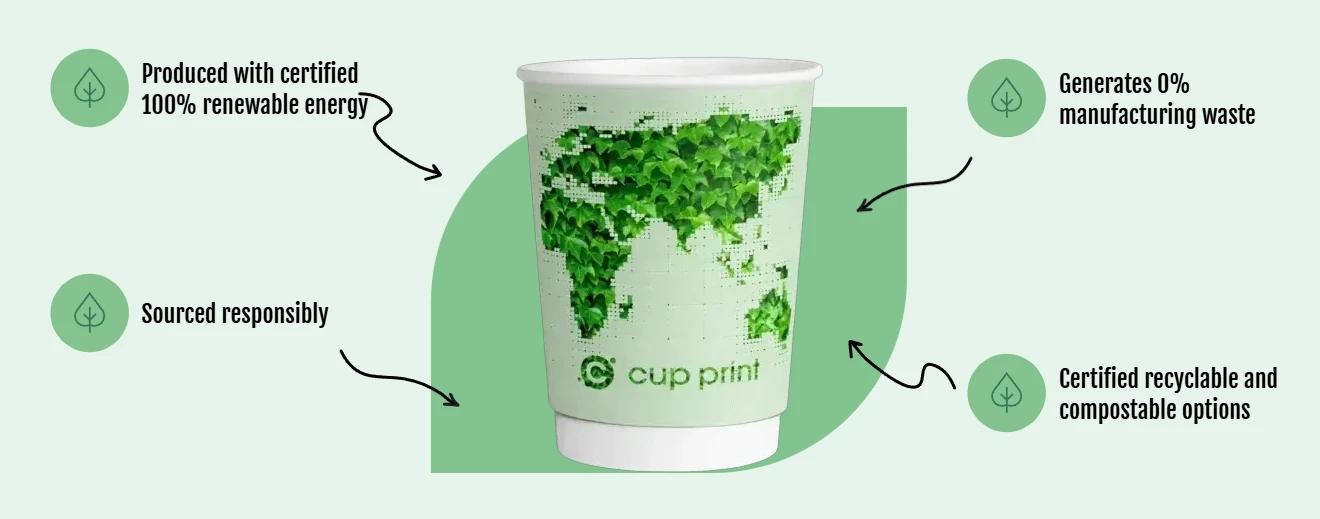
Compostable cups swap the plastic lining for a plant-based one, so the whole cup can break down. They only work if they reach a commercial composting facility. In a general waste bin a compostable cup behaves much like any other cup, so the collection matters as much as the cup you buy.
That is not a reason to avoid them. If you have a food waste or organics collection that accepts them, compostable cups take a real problem off your hands and read well to customers. Check with your collector before switching the whole range, then tell your customers which bin to use. Ireland's Circular Economy Act also provides for a levy on single-use cups, so it is sensible to weigh up greener options now rather than later.
Does the cup type change how recyclable it is?
Not by much. A single wall, double wall or ripple wall cup all use the same kind of inside lining, so all three face the same recycling problem. Double and ripple wall cups simply add more board on the outside for insulation. If anything, they are slightly more material to deal with. The wall type is a comfort and cost decision, covered in single, double and ripple wall cups, not a recycling one.
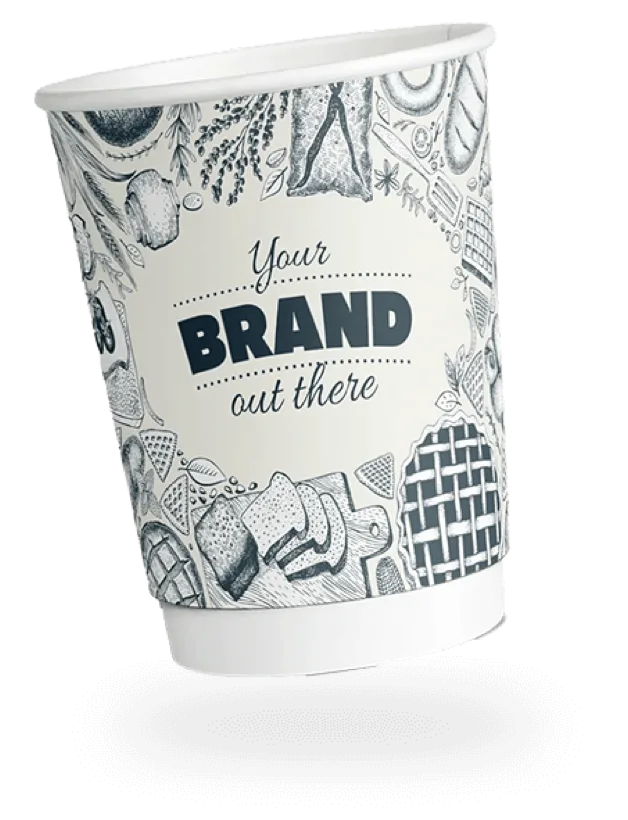
Printing does not stop a cup being recycled either, so a branded cup is no worse than a plain one. What does matter is buying from a supplier who can tell you what the cup is lined with and whether a recyclable or compostable version exists in the size you use. The full run-through of cup choices sits in the paper cups buying guide, and lid options are in the coffee cup lids guide.
Cups and lids, with greener options
Hot and cold cups in every common size, matching lids, and recyclable or compostable ranges. Trade prices and fast Irish delivery.
Frequently asked questions
Are paper coffee cups recyclable?
Paper cups are recyclable, but not in ordinary paper recycling. The thin plastic lining that makes them waterproof has to be separated at specialist facilities, so most kerbside bins cannot take them. Put used cups in general waste unless your collector says otherwise, and ask suppliers about recyclable or compostable ranges.
Why are paper coffee cups not recyclable in the paper bin?
Standard paper recycling pulps paper in water, and the thin plastic lining inside a cup will not break down in that process. Cups also arrive wet with coffee and milk, which contaminates clean paper. Both reasons together are why most collectors ask you to keep cups out of the paper bin.
Can paper cups be recycled anywhere?
Yes. Specialist plants can pulp the board and peel the plastic film away so both materials are handled separately. Those plants are far fewer than ordinary paper mills, so a cup only gets recycled if a dedicated cup collection takes it there. Ask your waste contractor whether a cup stream is available.
What bin should used coffee cups go in?
Ask your waste collector first, because rules vary by contractor and county. Unless they run a separate cup collection, used cups go in general waste. Empty any liquid first, and put plastic lids in with your plastics rather than leaving them on the cup.
Are compostable coffee cups better than recyclable ones?
Compostable cups replace the plastic lining with a plant-based one so the whole cup can break down, but only at a commercial composting facility. In general waste they behave much like a normal cup. They are a good choice if you have an organics collection that accepts them, so check before switching.
Can I put the plastic lid in with the cup?
No. Keep them apart. A plastic lid is a single material and is widely accepted in plastics recycling, so it is easier to deal with on its own. Leaving it on the cup means both items follow the cup into general waste, which wastes a lid that could have been recycled.