


Do Paper Coffee Cups Have Plastic, PFAS or Microplastics?

Paper cups do contain plastic, but only a very thin lining on the inside. Most cups use polyethylene, a coating that stops hot coffee soaking through the board. The cup itself is mostly paper. That lining is also the reason a used cup cannot go in the normal paper recycling bin.
Why do paper cups need a plastic lining at all?
Paper on its own soaks up liquid. A hot drink would soften the board in minutes and the cup would leak or collapse in your customer's hand. The thin plastic lining sits between the drink and the paper, holds the liquid in, and lets the glued seam stay sealed until the cup is finished with.
It also keeps the cup stable while it is hot. Coffee, tea and soup are served very hot, and the board has to hold its shape for as long as the drink takes to finish. The lining does that job with very little material, which is why the cup still feels and behaves like paper.
The same idea applies right across the range. Hot cups and cold cups are lined differently because they face different problems, one heat and one condensation. The paper cups buying guide covers how that changes which cup you order.
How much plastic is actually in a paper cup?
Only a small amount. The lining is a fine film on the inside face of the cup, far thinner than the board it sits on. By weight the cup is mostly paper board, with the plastic acting as a coating. That is why a paper cup crushes and tears like paper rather than behaving like a plastic cup.
Wall type does not change the lining. A single wall cup has one layer of board with the lining inside. A double or ripple wall cup adds a second outer layer of board for insulation, and that extra layer is plain paper with no coating. So a double wall cup has more paper, not more plastic. There is a fuller breakdown in single, double and ripple wall cups.

What does PFAS-free mean on a paper cup?
PFAS are a family of chemicals once used to make paper packaging resist grease and water. They are now being restricted in food packaging across the EU and Ireland, and reputable suppliers have moved away from them. A PFAS-free cup gets its waterproofing from the lining instead, with none of those chemicals added to the board.
PFAS and the plastic lining are two separate things, and people often mix them up. The lining is the visible waterproof layer. PFAS were an additive worked into the paper itself, mostly on greaseproof items like food wraps and containers. A cup can be PFAS-free and still be lined, and that is what most good cups are today.
When you order, ask two questions. Is the cup PFAS-free, and what is the lining made from. Any supplier who sells to food businesses should answer both without hesitating.
Do paper cups release microplastics into your drink?
This comes up a lot and the honest answer is that research is still ongoing. Studies have looked at whether hot liquid causes a lined cup to shed tiny plastic particles, and the findings so far are mixed. Paper cups remain approved food-contact packaging in Ireland and the EU, made to be safe for a hot drink.
What the question really turns on is the lining, so that is what to ask about when you order. A supplier who sells to food businesses should be able to name the coating on a cup and confirm it is approved for food contact. Vague answers are a reason to look elsewhere, whatever the research eventually settles on.
The other half of the answer is how the cup is used rather than what it is made of, and that is covered in are paper coffee cups safe.
Does the plastic lining stop paper cups being recycled?
It stops them going in the ordinary paper bin. The lining has to be separated from the board at a specialist facility, and most kerbside and office collections are not set up to do that. In practice used cups go in general waste unless your waste collector tells you otherwise.
This catches out a lot of cafe owners who assume a paper cup belongs with the cardboard. It does not, and putting lined cups into paper recycling can contaminate the load. Check with your own collector, because services do vary around the country. The full picture is in are paper coffee cups recyclable.
Are there paper cups without plastic?
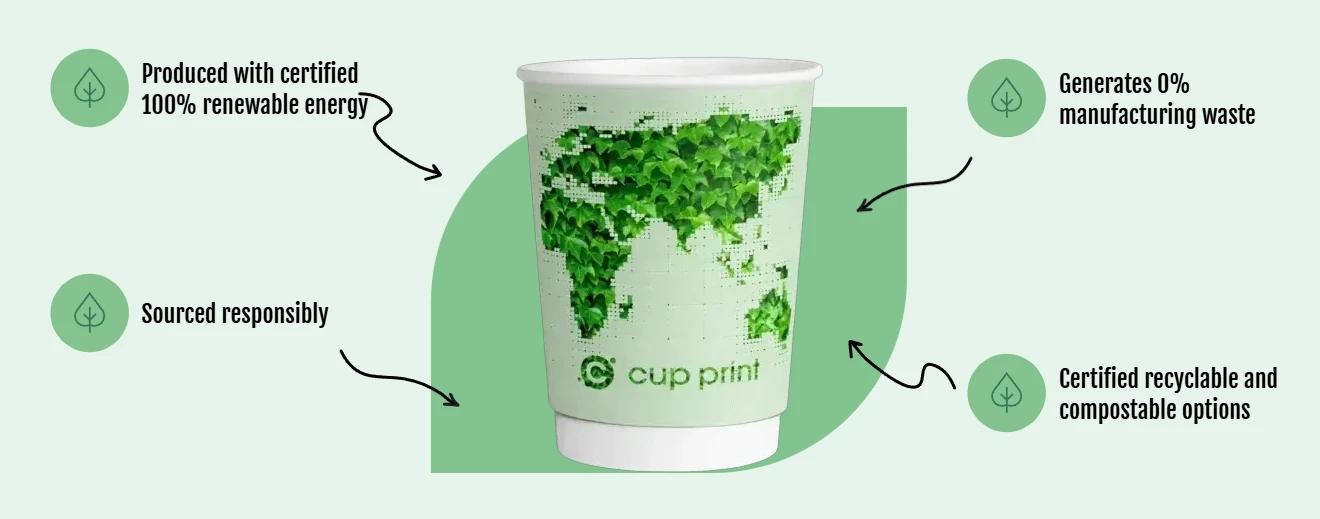
There are alternatives to the standard polyethylene lining. Compostable cups use a plant-based lining instead, and some ranges are built to be recycled as paper once collected properly. None of them are a plain, uncoated cup, because a cup with no lining cannot hold a hot drink.
If sustainability matters to your business, weigh three things. The lining type, whether your waste collector can actually take the cup you choose, and the price per cup at the volume you use. A compostable cup that ends up in general waste has not achieved much, so the collection side matters as much as the cup.
Ireland's Circular Economy Act also provides for a levy on single-use cups, so it is worth planning for rather than reacting to. Reusable cup schemes and a discount for customers who bring their own are the other half of the answer for many cafes.
Order cups and lids that name what is in them
PFAS-free paper cups in every common size, with matching lids, at trade prices and fast Irish delivery.
Frequently asked questions
Do paper cups contain plastic?
Yes, a little. Most paper cups have a very thin polyethylene lining on the inside to make them waterproof, which is why they cannot go in normal paper recycling. The cup is mostly paper board, with the plastic as a coating. Reputable cups are now made PFAS-free, without the older grease-proofing chemicals.
Why do paper cups have a plastic lining?
Paper soaks up liquid, so an unlined cup would go soft and leak within minutes of a hot drink going in. The thin lining sits between the drink and the board, holds the liquid in and keeps the glued seam sealed. It uses very little material, so the cup still behaves like paper.
How much plastic is in a paper cup?
Only a small amount. The lining is a fine film on the inside face, far thinner than the board it sits on, and by weight the cup is mostly paper board. Double and ripple wall cups add an extra layer of plain, uncoated paper for insulation, so they contain more paper rather than more plastic.
What does PFAS-free mean on a paper cup?
PFAS are chemicals once used to make paper packaging resist grease and water. They are being restricted in food packaging across the EU and Ireland, and good suppliers have moved away from them. A PFAS-free cup relies on its lining for waterproofing, with none of those chemicals added to the board itself.
Do paper cups release microplastics into hot drinks?
Research into whether lined cups shed tiny plastic particles into hot liquid is still ongoing, and the findings so far are mixed. Paper cups remain approved food-contact packaging in Ireland and the EU. Ask your supplier to name the lining on the cups you buy and to confirm they are approved for food contact.
Are there paper cups with no plastic at all?
Not really, because a cup with no lining cannot hold a hot drink. There are alternatives to the standard polyethylene coating, including compostable cups with a plant-based lining and ranges built to be recycled as paper. Check your waste collector can take whichever type you choose before switching.