


Pavement Signs and A-Boards for Shops and Cafes
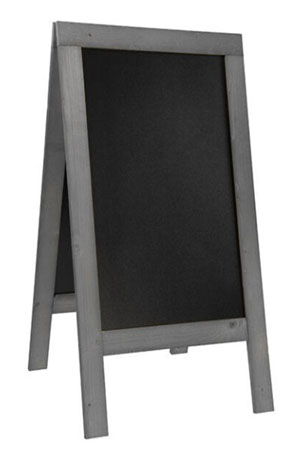
Pavement signs, also called A-boards, are double-sided freestanding signs that sit on the footpath outside a shop or cafe to catch passing trade. Most are A1 or A2. They take either a printed poster behind a snap-frame cover or a chalkboard panel you write on, so the message can change daily.
What is a pavement A-board sign?
A pavement A-board is a double-sided sign that folds into an A shape and stands on the ground outside a shop. Both faces carry a message, so people see it walking in either direction. You put it out when you open and take it in when you close, which is why it is also called a forecourt sign.
The frame is the part you buy once. The message is the part you change. Most boards hold either a printed poster protected behind a clear cover, or a black panel you write on with chalk pens. Both fit the same style of frame, so the choice comes down to how often your offer changes.
For most small shops and cafes, an A-board is the cheapest bit of signage that does real work. It reaches people who are already walking past your door and who have not looked up at your fascia. This guide sits under the wider shop display and signage guide.
What size pavement sign should you buy, A1 or A2?
A1 and A2 cover almost every shop. A1 is the larger of the two and stays readable from further down the street, so it suits busy roads and fast-moving footfall. A2 takes up less footpath and suits narrow frontages, doorways and quieter streets. If you have room for A1, take A1.
Size is really about reading distance. Someone walking quickly on a wide street needs bigger type and a bigger board to notice you at all. Someone strolling past a village shopfront is already close enough for A2 to work. Measure the clear space outside your door before you order, because a board that blocks the path has to come back in.
| Size | Best for | Footpath space | Typical use |
|---|---|---|---|
| A1 | Busy streets, wide footpaths, traffic passing | More | Shops, forecourts, high street cafes |
| A2 | Narrow frontages, quiet streets, doorways | Less | Village shops, small cafes, side entrances |
Snap-frame or chalkboard, which insert works better?
Choose a snap-frame pavement sign if your message is printed and stays up for weeks. Choose a chalkboard A-board if you change the message most days. Snap frames look sharper and protect the poster from rain behind a clear cover. Chalkboards cost less to run because you never print anything.
What matters outdoors is not how quickly the insert changes but how it copes with weather and handling. A printed poster behind a clear cover stays dry and legible in rain, while a chalkboard face shrugs off knocks and wet hands but has to be rewritten if it gets smudged. The mechanics of the frames themselves are covered in snap frames explained.
- Snap-frame board: printed posters, clean and professional, weather-protected, best for offers lasting weeks.
- Chalkboard A-board: hand-written with chalk pens, warm and personal, best for daily menus and specials.
- Both: some shops run a printed frame at the door and a chalkboard at the kerb.
How do you stop an A-board blowing over?
Weight the base. Most pavement signs have a water-fillable or sand-fillable base, and a board with an empty base will go over in the first strong gust. Fill it, stand the board against a wall or kerb rather than in open wind, and bring it inside in bad weather or overnight.
A sign lying face down on wet ground sells nothing and scratches. Water in the base is easy and free, though sand holds more weight and will not freeze. Some frames also take a ground spike for grass or gravel forecourts. Check the board can fold flat, because a board that stores easily actually gets brought in.
Pavement signs and A-boards for Irish shops
A1 and A2 pavement displays, snap frames and chalkboards at trade prices, with fast delivery from our Cavan warehouse.
Are you allowed to put a sign on the footpath?
The footpath belongs to the local authority, not to your shop, so pavement signs are controlled locally. Rules differ by council and by street. In general you must leave a clear width for people to pass, including wheelchair users and buggies, and keep the board tight to your own frontage. Ask your local authority before you put one out.
Practical habits keep you out of trouble. Keep the board within your own shop width, never in the middle of the path, never blocking a crossing, a tactile paving strip or a bus stop. Take it in when you close. If a council officer asks you to move it, move it.
What should you write on a pavement sign?
Write one message, in big type, that a walking person can take in at a glance without breaking stride. Lead with the thing people actually want, a price, a product or an offer, then a short reason to step in. Long paragraphs and small type get ignored, because nobody stops on a footpath to read a sign.
Keep the top line short and readable from across the street. Use your brand colour so the board matches your fascia and window. Change the message often enough that regulars still look at it, because a board that says the same thing for six months becomes street furniture.
Inside the shop, the same rule applies to your prices. Clear shelf pricing sells, and the detail is in shelf-edge labels. Keep wet floor signs to hand too, since a board outside and a wet floor inside are both about keeping people safe and moving.
Frequently asked questions
What is a pavement sign?
A pavement sign is a double-sided freestanding sign that stands on the footpath outside a shop or cafe. It folds into an A shape, which is why it is also called an A-board. Both faces carry a message so people see it walking in either direction, and it goes out when you open and comes in when you close.
What size are A-board pavement signs?
Pavement A-board signs are usually A1 or A2, the sizes that are visible from a distance on a footpath without taking up too much space. A1 is larger and better for catching passing trade at speed. A2 suits tighter frontages and quieter streets. Many take a snap-frame or chalkboard insert so you can change the message easily.
Should I choose a snap-frame or a chalkboard A-board?
Choose a snap-frame board if your message is printed and stays up for weeks, because it looks sharp and the clear cover keeps the poster dry. Choose a chalkboard A-board if you change the message most days, since you write it by hand with chalk pens and never print anything.
How do you stop a pavement sign blowing over?
Fill the base. Most pavement signs have a base you fill with water or sand, and an empty base will not hold the board in wind. Sand holds more weight and will not freeze. Stand the board against a wall or kerb rather than in open wind, and bring it inside overnight or in bad weather.
Do I need permission to put an A-board on the footpath?
Usually yes. The footpath belongs to the local authority, so pavement signs are controlled by your council and the rules differ by area and street. You are generally expected to leave a clear width for people to pass and keep the board within your own frontage. Check with your local authority before putting one out.
What should I write on a pavement A-board?
Write one short message in big type that someone walking past can take in at a glance, without breaking stride. Lead with a price, a product or an offer, then give a short reason to step inside. Avoid long paragraphs and small type, and change the message often enough that regulars keep looking at it rather than walking by.