


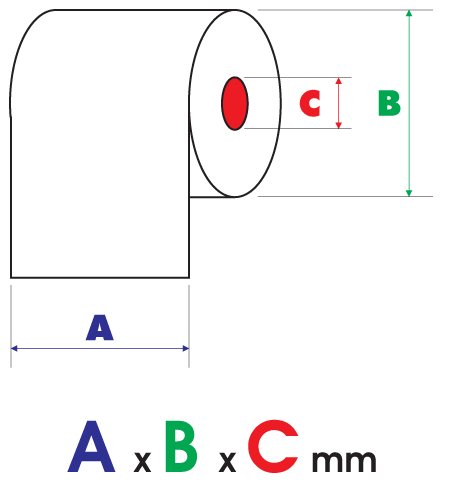
What Is BPA-Free Thermal Paper (and How to Tell If Yours Is)?
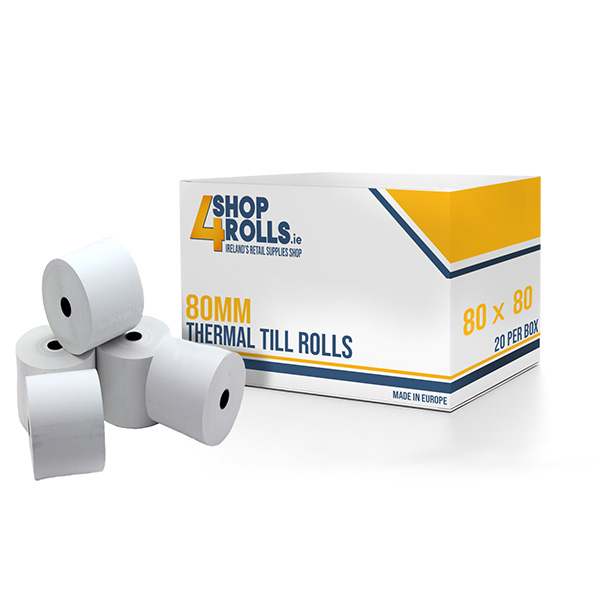
BPA-free thermal paper is receipt paper whose heat-sensitive coating uses a colour developer other than bisphenol A. The printing works the same way. Only the chemistry of the developer changes. Since January 2020 EU law requires this, so every thermal roll sold legally in Ireland is BPA-free.
What does BPA-free thermal paper actually mean?
BPA-free thermal paper is a roll whose coating uses a colour developer that is not bisphenol A. Thermal paper prints by heat reacting a colourless dye with a developer. Swap the developer for a non-BPA one and the roll is BPA-free. It looks, feels and prints exactly the same as any other thermal roll.
The wording describes one ingredient, not the whole product. The base paper, the coating method, the print quality and the roll sizes are unchanged. Your till, receipt printer or card terminal will not know the difference. If you want the full mechanism behind the coating, the pillar guide is receipt paper safe covers how the dye and developer work together.
BPA was used for decades because it is cheap and it develops a sharp, dark image. The problem is that it sits loose in the surface coating rather than being bound into the paper, so it can rub onto skin. That is why the label exists at all.
Is BPA-free thermal paper a selling point in Ireland?
Not really. Under EU rules (REACH Annex XVII, entry 66) thermal paper containing BPA at or above 0.02% by weight cannot be placed on the EU market from 2 January 2020. Ireland follows this. So BPA-free is the legal baseline for any roll bought here, not an upgrade you pay extra for.
This matters when you are comparing suppliers. A seller marketing BPA-free rolls as a special feature is describing the law. The genuine differences between rolls are print quality, coating durability, roll length, core size and where the paper comes from. Our guide does receipt paper contain BPA goes into which receipts might still carry it.
The rolls that can still contain BPA are older stock printed or bought before the ban, and rolls imported directly from outside the EU. If you buy in bulk from an online marketplace with an overseas seller, that is the case worth checking.
Is BPA-free thermal paper safe?
BPA-free rolls remove BPA, which is the main win. Many of them replace it with BPS (bisphenol S), a chemically similar developer that is also treated as an endocrine disruptor and is under regulatory review. So BPA-free is a real improvement, but it does not always mean bisphenol-free.
The cleaner option is phenol-free thermal paper. It uses a different class of developer entirely, avoiding both BPA and BPS. For a shop where staff handle hundreds of receipts a shift, that is the version worth asking for. For a low-volume office printer, standard BPA-free rolls are already fine.
| Label on the roll | Developer used | What it tells you |
|---|---|---|
| No claim, pre-2020 stock | Usually BPA | Old stock or non-EU import. Not legal to sell in the EU now |
| BPA-free | Often BPS, sometimes other | No BPA. Meets EU law. BPS is similar and under review |
| Phenol-free | Non-phenolic developer | Avoids BPA and BPS. The cleanest mainstream choice |
How can you tell if your thermal paper is BPA-free?
You cannot tell by touch, colour or print quality. BPA-free and BPA rolls look identical. The reliable checks are the box, the product listing and the supplier. Ask for written confirmation of the developer type, and keep the supplier's statement or safety data sheet on file for audits.
What to do in practice:
- Check the box and the invoice. Reputable rolls state BPA-free or phenol-free on the packaging or the spec sheet.
- Ask the supplier directly. A one-line email asking whether the rolls are BPA-free and whether they are phenol-free gives you something in writing.
- Check where the paper is made. EU-sourced paper is covered by the ban. Direct overseas imports are not.
- Ignore the home tests you read about online. The scratch test tells you a roll is thermal, not which developer it uses. Rubbing a receipt on a banknote proves nothing about BPA.
- Clear out old stock. If you have rolls sitting in a store room from before 2020, they may predate the ban.
The scratch test is still useful for telling thermal from plain paper. That is a different question, covered in why do receipts fade.
Does BPA-free thermal paper print or last any differently?
Print quality is comparable. The image is formed the same way, by heat, and a good BPA-free roll gives the same sharp black text. Fading behaviour depends on coating quality and storage rather than on the developer alone. Heat, sunlight and friction still darken or wipe any thermal receipt over time.
Early BPA-free papers picked up a reputation for weaker image stability, and you will still see that repeated. It is worth judging a roll on its own performance rather than on the label. If a receipt fades faster than you expect, look first at where it was stored. A receipt left on a sunny counter or in a hot car will not survive, whatever the developer.
Storage advice is the same across all thermal paper. Keep rolls cool, dry and out of direct light, away from solvents and soft PVC wallets. Scan or photograph anything you need to keep for records.
What to ask a supplier before you order
Ask three things and you have covered the ground. Is the paper BPA-free, is it phenol-free, and where is the paper made. Then ask for the answer by email or on the spec sheet rather than over the phone, so you have something on file if a staff member or an inspector raises it later.
A supplier who sells thermal rolls all day will answer those in a sentence. Hesitation, or a reply that only repeats the words on the box, is a reasonable signal to ask for the safety data sheet before you commit to a bulk order. Price your options on the phenol-free version too, so you can see what the upgrade actually costs on your own volumes rather than assuming it is out of reach.
One thing not to ask for is a recyclable thermal roll. BPA-free does not mean recyclable, and no change of developer makes a coated receipt fit for the paper bin. That is a separate question, covered in is BPA-free thermal paper recyclable.
BPA-free thermal till rolls, delivered across Ireland
Every common size in stock at trade prices, BPA-free in line with EU rules. Ask us about phenol-free rolls for tills your staff run all day.
Frequently asked questions
What is BPA-free thermal paper?
BPA-free thermal paper is receipt paper whose heat-sensitive coating uses a colour developer other than bisphenol A. It prints the same way, by heat reacting a colourless dye with the developer, and it looks and feels like any other thermal roll. Only the chemistry of that one ingredient changes.
How can I tell if my thermal paper is BPA-free?
You cannot tell by touching or looking at it, because BPA-free and BPA rolls are identical to handle. Check the box, the product listing and the invoice, and ask your supplier to confirm in writing. Rolls bought from an EU supplier are BPA-free by law.
Is BPA-free thermal paper safe?
BPA-free rolls remove BPA, which is the main concern with older receipt paper. Many replace it with BPS, a similar chemical also treated as an endocrine disruptor and under review. BPA-free is a clear improvement, and phenol-free thermal paper, which avoids both, goes one step further.
Is all thermal paper sold in Ireland BPA-free?
Legally, yes. EU rules ban thermal paper containing BPA at or above 0.02% by weight from the EU market since 2 January 2020, and Ireland follows this. The exceptions are old stock bought before the ban and rolls imported directly from outside the EU.
What is the difference between BPA-free and phenol-free thermal paper?
BPA-free only means the developer is not bisphenol A, and it is often BPS instead. Phenol-free means the roll uses a non-phenolic developer, avoiding BPA and BPS together. Phenol-free is the cleaner choice for staff who handle receipts all day.
What should I ask a supplier about BPA-free rolls?
Ask whether the paper is BPA-free, whether it is phenol-free, and where the paper is made. Ask for the answer by email or on the spec sheet so you have it on file if staff or an inspector query it later. It is also worth pricing the phenol-free version on your own volumes.