

Cleaning Cloths Colour Coding: The Colour System for Food Safety
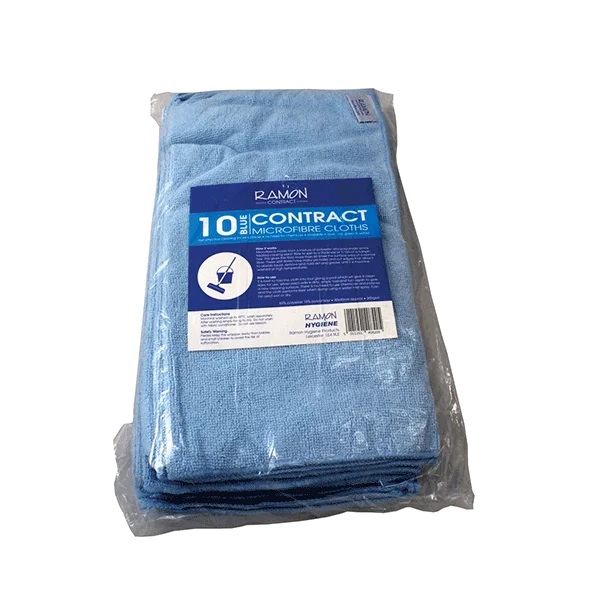
Colour-coded cleaning assigns cloths, mops and equipment to areas by colour so germs do not cross between them. The common system is red for washroom floors and toilets, yellow for washroom surfaces, green for kitchens and food, and blue for general low-risk areas. It is a simple hygiene measure inspectors expect to see.
What is colour-coded cleaning?
Colour-coded cleaning gives every area of your building its own colour of cleaning kit. A cloth, mop or brush in that colour is used in that area and nowhere else. Because the colour is obvious at a glance, staff cannot mix up the toilet cloth and the worktop cloth by accident.
The idea is plain. Dirt and bacteria travel on the cloth, not through the air. If the same cloth wipes a toilet seat and then a food prep bench, everything on the seat is now on the bench. Colour coding blocks that route without asking anyone to remember a rule. They just pick up the green cloth in the kitchen.
It works for the same reason blue roll works. Colour does the thinking for you. There is background on the paper side of this in the retail and catering cleaning supplies guide.
What do red, yellow, green and blue mean?
Red covers washroom floors and toilets, the highest-risk areas. Yellow covers washroom surfaces such as sinks, taps and hand basins. Green covers kitchens, food prep and bars. Blue covers general low-risk areas like offices, shop floors, glass and reception. Some sites add white for a clinical or special zone.
| Colour | Area | Typical jobs |
|---|---|---|
| Red | Washroom floors, toilets, urinals | Toilet bowls, cubicle floors, sanitary bins |
| Yellow | Washroom surfaces | Sinks, taps, mirrors, hand dryers, door handles |
| Green | Kitchen and food areas | Prep benches, food contact surfaces, bars |
| Blue | General and low risk | Shop floor, offices, glass, shelving, tills |
Red and yellow are both washroom colours, which surprises people. The split matters because the floor and the toilet are dirtier than the sink you wash your hands in. Keeping the two apart means you are not wiping the hand basin with something that has been round a urinal.
Why do kitchens use green and blue?
Green is the food-area colour in the standard system, so kitchen cloths, mops and brushes are green. Blue also turns up in kitchens because blue paper and blue cloths show against food. Neither colour is a natural food colour, so a stray fibre stands out and gets removed before it reaches a plate.
That is the same reason kitchen wiping paper is blue rather than white. A white fibre in a white sauce is invisible. A blue one is not. Blue roll and blue cloths became the kitchen standard on that logic alone, and the habit stuck.
In practice most Irish kitchens run green cloths for food contact surfaces and blue roll for spills and general wiping. That combination is normal and no inspector will query it. There is more on the paper choice in centre-feed vs blue roll vs kitchen roll.
Does colour coding apply to mops and buckets too?
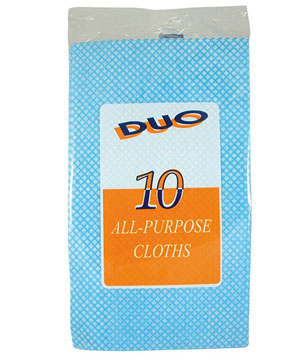
Yes. The colour code covers every piece of cleaning kit that touches a surface, not only cloths. That means mop heads, mop handles, buckets, scrubbing brushes, dustpans, squeegees and gloves. A green cloth paired with a red mop bucket defeats the whole point, so match the kit across the board.
Mops and buckets are the item people most often get wrong, usually because the bucket lives in a corridor and gets grabbed by whoever is nearest. Buying buckets in the four colours fixes it faster than any training session. The detail is in the mops and buckets guide.
Gloves are worth adding too. Cheap disposable gloves come in colours, and a red glove in the kitchen is as visible a mistake as a red cloth.
Colour-coded cloths, in stock
Microfibre and disposable cloths in red, yellow, green and blue, at trade prices with fast Irish delivery from our Cavan warehouse.
How do you set up a colour-coded system that staff actually follow?
Buy the four colours, store each one separately, and put a chart on the cupboard wall showing which colour goes where. Brief every new starter on day one. Check the cupboard weekly. The system fails when colours get mixed in one bucket or when a colour runs out and someone grabs the nearest cloth.
A short checklist covers most of it:
- Order all four colours together so no colour runs out on its own.
- Store each colour in its own labelled box or hook, never in one pile.
- Print a wall chart with the colour, the area and a photo of the kit.
- Wash reusable cloths by colour, in separate loads, so nothing gets swapped.
- Bin any cloth that has been used in the wrong area rather than washing it back into service.
- Keep a small stock buffer of the busy colours, usually green and blue.
Choosing between washable and single-use kit changes how you run this. Microfibre is reusable and cheaper over time but needs laundering by colour. Disposables cost more per wipe and remove the laundry problem entirely. The comparison is in microfibre vs disposable cloths.
Is colour-coded cleaning a legal requirement in Ireland?
Colour coding is an industry convention rather than a named rule. Irish food businesses must have a food safety management system based on HACCP principles, and that system has to prevent cross-contamination. Colour coding is the simplest way to show an inspector how you do it, which is why it is expected in practice.
Put another way, nobody will fine you for the colour of a cloth. They will act if raw meat bacteria end up on a salad bench. Colour coding is the cheapest evidence that you have thought about the problem, and it is easy to demonstrate during an inspection because the cupboard speaks for itself.
Frequently asked questions
What is colour-coded cleaning?
Colour-coded cleaning uses a set of colours, commonly red, yellow, green and blue, to assign cloths, mops and equipment to specific areas so germs do not cross between them. Red is for washroom floors and toilets, yellow for washroom surfaces, green for kitchens and food, and blue for general areas. It is a simple, widely used food-safety and hygiene measure.
What do the cleaning cloth colours mean?
Red is for washroom floors, toilets and urinals. Yellow is for washroom surfaces such as sinks, taps and mirrors. Green is for kitchens, food prep and bars. Blue is for general low-risk areas like shop floors, offices and glass. Some sites add white for a clinical or special zone.
What colour cloth is used in a kitchen?
Green is the kitchen and food-area colour in the standard four-colour system, so kitchen cloths, mops and brushes should be green. Blue also appears in kitchens because blue paper and blue cloths show up against food. Running green cloths with blue roll for spills is normal and widely accepted.
Does colour coding apply to mops and buckets?
Yes. The colour code covers every item that touches a surface, including mop heads, mop handles, buckets, scrubbing brushes, dustpans, squeegees and gloves. Pairing a green cloth with a red bucket defeats the purpose. Buying buckets in all four colours is usually the quickest way to stop the mistake.
Is colour-coded cleaning a legal requirement in Ireland?
It is an industry convention rather than a named rule. Irish food businesses must run a food safety management system based on HACCP principles that prevents cross-contamination. Colour coding is the simplest way to show an inspector how you do that, so it is expected in practice even though no law names the colours.
What happens if a cloth is used in the wrong area?
Take it out of service. Bin a disposable cloth straight away, and for a reusable cloth either launder it separately before it returns to its own colour group or discard it. Do not wipe another surface with it first. Then check why it happened, usually a colour ran out or storage got mixed.