


Are Microfibre Cloths Good? Microfibre vs Disposable Cloths
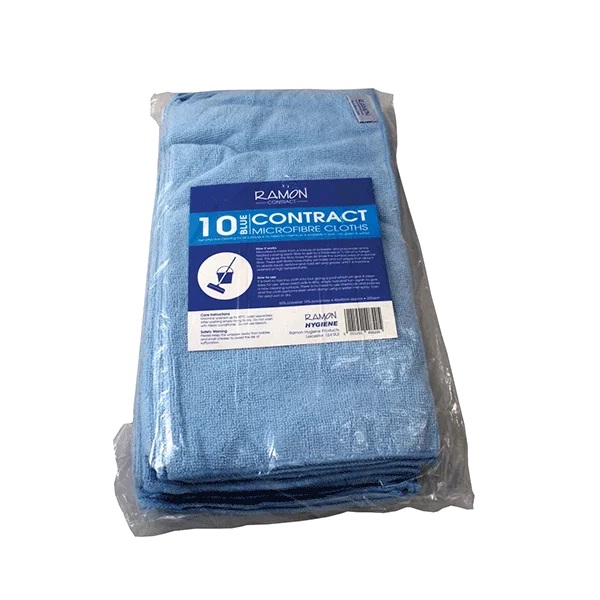
Microfibre cloths are good for most commercial cleaning. They lift grease and dirt well, wash and reuse many times, and come colour-coded by area. Disposable cloths suit high-risk jobs where you want the cloth binned after one use. Most shops and kitchens keep both and pick by the job.
Are microfibre cloths good for commercial cleaning?
Microfibre cloths are good for most commercial cleaning. The fibres are split very fine, so they grab grease, dust and fine dirt rather than pushing it around. They work damp with little or no chemical, they leave glass and steel streak-free, and one cloth stands up to a long run of washes.
That is why microfibre has taken over so much daily cleaning in shops, cafes and kitchens. A cotton cloth smears a greasy counter. Microfibre pulls the film off it. On stainless steel, glass and display cabinets, microfibre with plain water often beats a cloth loaded with spray cleaner.
The catch is laundering. A microfibre cloth only stays good if it goes into a wash and comes back clean. If your team leaves damp cloths in a bucket all day, you have swapped a cost saving for a hygiene problem. Microfibre works when you have a proper cloth run, a set out on the floor, a set in the wash, a set clean and ready.
What are disposable cloths best for?
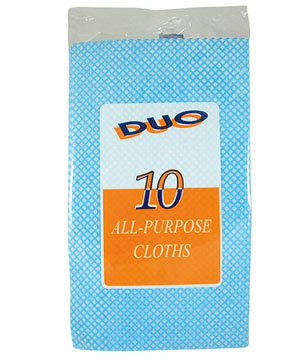
Disposable cloths, such as all-purpose J-cloths, are best for jobs where the cloth should never be used twice. Raw meat and fish areas, blood and food spills, bin areas, washrooms and sick clean-ups. You wipe, you bin it, and nothing travels to the next surface. No wash, no sorting, no doubt.
They are also handy when staff turnover is high or when contractors are in. A disposable cloth needs no training and no laundry routine. Somebody new can do the job right on their first shift.
The trade-offs are waste and running cost. Every cloth is bought once and thrown away, so the spend never stops, and used cloths go to general waste rather than recycling. The same rule applies to soiled paper, which is covered in can blue roll be recycled.
Microfibre vs disposable: how do they compare?
Microfibre wins on cleaning power, cost over time and waste. Disposables win on hygiene certainty, simplicity and the price of a single cloth. Microfibre needs a laundry routine to stay safe. Disposables need none, because each cloth is used once and binned.
| Microfibre cloths | Disposable cloths | |
|---|---|---|
| Uses | Many, washed between uses | One, then binned |
| Grease and fine dirt | Lifts it off the surface | Absorbs, but smears more |
| Cost over time | Lower, spread over many washes | Ongoing, every cloth is bought again |
| Cross-contamination risk | Real if washing slips | Very low, nothing is reused |
| Staff routine needed | Yes, a wash and sort cycle | No, wipe and bin |
| Waste | Little | Daily, to general waste |
| Colour coding | Yes, in red, yellow, green and blue | Yes, in common colours |
Read the table as a split of work, not a winner. Most kitchens end up with microfibre doing the daily surfaces and disposables covering the jobs where reuse is a risk. That mix is what the cleaning supplies guide recommends for a working cupboard.
Which cloth should you use in each area?
Use microfibre where surfaces are cleaned again and again and the risk is low, such as counters, tables, glass, shelving and stainless steel. Use disposable where the soil is high risk or heavy, such as raw meat prep, spills, bins and toilets. Colour-code both so a washroom cloth never reaches a food surface.
- Front of house and shelves: microfibre, blue or your general colour.
- Food prep surfaces: microfibre in green, washed after every shift.
- Raw meat and fish areas: disposable, binned after the job.
- Spills and clean-ups: disposable cloth or blue roll, then bin it.
- Washroom surfaces: yellow, and never mixed with kitchen cloths.
- Toilets and washroom floors: red, or disposable.
The colour system is set out in colour-coded cleaning. For general wiping and spills, paper often does the job better than either cloth, and the formats are compared in centre-feed vs blue roll vs kitchen roll.
How do you wash and look after microfibre cloths?
Wash microfibre on a hot cycle with detergent only. Skip fabric softener, it coats the fibres and stops them grabbing dirt. Wash microfibre apart from cotton and terry so it does not pick up lint. Air dry or use a low heat setting. Retire a cloth once it feels slick or stops holding water.
Keep the colours separated through the whole cycle, not only on the floor. If green and red cloths go into one wash and come out in one pile, the colour code has done nothing. Give each colour its own bag or bin for used cloths, then wash and store by colour.
Set a par level for both cloth types so you never run short mid-shift. Microfibre gets replaced in batches as it wears out. Disposables get reordered on a rhythm, because they always run down.
Order cleaning cloths by the pack
Colour-coded microfibre and all-purpose disposable cloths in stock, at trade prices with fast Irish delivery from our Cavan warehouse.
Frequently asked questions
Are microfibre cloths good?
Microfibre cloths are good for most commercial cleaning. The fibres are split very fine, so they lift grease, dust and fine dirt off a surface instead of pushing it around, and they leave glass and steel streak-free with little or no chemical. One cloth stands up to many washes, so the cost is spread out.
Are microfibre or disposable cloths better?
It depends on the job. Microfibre is better for daily surfaces because it cleans well and can be washed and reused. Disposable cloths are better where the cloth must never be used twice, such as raw meat areas, spills and washrooms. Most shops and kitchens keep both and pick by the task.
How many times can you reuse a microfibre cloth?
A microfibre cloth stands up to a long run of hot washes before it wears out. Rather than counting washes, judge it by feel. Retire the cloth once it feels slick, stops holding water or stops picking up dirt. Fabric softener and high heat shorten its life, so avoid both.
How should you wash microfibre cleaning cloths?
Wash microfibre on a hot cycle with detergent only and no fabric softener, because softener coats the fibres and stops them grabbing dirt. Wash it apart from cotton and terry cloths so it does not pick up lint. Air dry or use a low heat setting, and keep each colour separate through the whole cycle.
When should you use a disposable cloth instead of microfibre?
Use a disposable cloth when reusing it would be a risk. That means raw meat and fish areas, food and blood spills, bin areas, washrooms and sick clean-ups. You wipe, you bin it, and nothing carries to the next surface. It also suits busy sites where a laundry routine is hard to keep up.
Do microfibre cloths come colour-coded?
Yes. Microfibre cloths come in the standard cleaning colours of red, yellow, green and blue, so you can assign each colour to an area and stop germs crossing between them. Keep the colours separate in use, in the used-cloth bin and through the wash, or the colour code does nothing.