


What Is Carbonless Paper? 2-Ply and 3-Ply Rolls Explained

Carbonless paper is paper that copies itself without any carbon sheet in between. The back of each layer carries a micro-coating that reacts under pressure, so writing or printing on the top sheet appears on the sheets below. A 2-ply roll gives you the original plus one copy. A 3-ply roll gives you two copies.
How does carbonless paper work?
Carbonless paper works by pressure. The back of the top sheet is coated with tiny capsules of colourless dye. The front of the sheet below is coated with a clay-like developer. When a pen or a printer pin presses on the top sheet, the capsules burst at that exact spot and the dye meets the developer, forming the mark on the copy.
That is why it is often sold as NCR paper, short for no-carbon-required. The old way was to sandwich a sheet of black carbon paper between two pages. It worked, but it smudged fingers, tore easily and had to be thrown away after every use. Carbonless paper builds the copying into the sheets themselves, so there is nothing to insert and nothing extra to bin.
The copy only appears where pressure lands, so the duplicate is a real match for the original, including handwriting and signatures. Press harder if a third layer is looking faint, and keep the pad or roll flat while you write.
What is the difference between 2-ply and 3-ply rolls?
The number of plies is the number of layers, so it is the number of copies you get. A 2-ply roll has two layers, a white top and one coloured copy, giving the original plus one duplicate. A 3-ply roll adds a third layer for two copies. More plies means more copies, and a slightly thicker roll on the spindle.
Pick the ply count from how many people need the same piece of paper at the same time. A takeaway that prints one docket for the kitchen and keeps one at the counter needs 2-ply. A restaurant that splits an order between kitchen, bar and till needs 3-ply.
| Roll | Layers | Copies you get | Typical use |
|---|---|---|---|
| 1-ply | One | Original only | Standard receipts at the till |
| 2-ply carbonless | Two | Original plus one copy | Kitchen docket plus a counter copy |
| 3-ply carbonless | Three | Original plus two copies | Kitchen, bar and till, or driver, office and customer |
What do the colours on the layers mean?
The colours are there to sort the copies quickly. The top layer is almost always white, and the layers under it are tinted, commonly yellow or pink. Nothing about the colour changes how the paper copies. It simply lets staff see at a glance which sheet is the original and which is the duplicate.
Most kitchens agree a rule and stick to it. White goes to the person doing the work, the coloured copy stays behind as the record. Once your team learns the colour, orders stop going astray on a busy Saturday night.
Do not confuse coloured carbonless layers with coloured thermal paper. Thermal rolls can also be supplied in blue, green, pink and yellow, but that colour is only for branding and sorting, and those rolls still make no copies. There is more on that in coloured thermal rolls.
Can you use carbonless paper in a thermal printer?
No. Carbonless rolls need pressure to copy, so they only work in an impact printer, the sort with a small striking head or pins. A thermal printer prints with heat and never touches the paper hard enough to burst the capsules, so a carbonless roll fed into it comes out blank on the copy layers.
This trips people up when they buy a new till. If your machine takes thermal rolls it cannot give you a second copy on paper, and you need a separate impact printer for dockets. If you are unsure which type you have, the scratch test in thermal till rolls explained settles it in ten seconds.
Two other things go with the printer rather than the paper:
- Size. Kitchen impact printers take a different width from the thermal rolls at the till, so measure the old roll rather than assuming. The widths and how to read them are set out in wide-format till rolls.
- Ribbon. Impact printers use an ink ribbon to print the top copy, so keep a spare ribbon with your spare rolls.
Where is carbonless paper used?
Anywhere two people need the same piece of paper at once. The usual jobs are kitchen dockets in restaurants and takeaways, delivery notes where the driver leaves one copy and brings one back, invoices and receipts written out by hand, and job sheets for trades. Hand-written waiter and order pads use the same carbonless trick in pad form rather than on a roll.
It also holds up where a thermal receipt would not. Thermal print fades with heat, light and time, while a carbonless copy is a pressed mark that stays readable in a filing box. That matters for anything you keep as a record.
Carbonless rolls are one of several rolls made for a particular job. The full set is covered in the parent guide, specialist till and receipt rolls.
Order 2-ply and 3-ply carbonless rolls
Kitchen dockets, delivery notes and order copies, in the common impact-printer sizes, at trade prices with fast Irish delivery from our Cavan warehouse.
Frequently asked questions
What is carbonless paper?
Carbonless paper is paper that copies itself without a sheet of carbon in between. The back of each layer carries a coating of colourless dye capsules, and the layer below carries a developer. Pressure from a pen or a printer pin bursts the capsules and forms the copy. It is also sold as NCR paper, short for no-carbon-required.
How does carbonless paper work?
Pressure does the work. Writing or printing on the top sheet bursts tiny capsules of colourless dye on its underside. The dye meets a developer coating on the sheet below and turns dark at that exact spot. The copy appears only where the pressure landed, so it matches the original, including handwriting and signatures.
What is the difference between 2-ply and 3-ply rolls?
The ply count is the number of layers, so it is the number of copies. A 2-ply roll has two layers, a white top and one coloured copy, giving the original plus one duplicate. A 3-ply roll adds a third layer for two copies. Choose by how many people need the same docket at once.
Why are the layers different colours?
The colours sort the copies quickly. The top layer is normally white and the layers beneath are tinted, commonly yellow or pink. The colour has no effect on how the paper copies. It simply lets staff see at a glance which sheet is the original and which is the duplicate during a busy service.
Can you use carbonless rolls in a thermal printer?
No. Carbonless rolls copy under pressure, so they need an impact printer with a striking head. A thermal printer prints with heat and never presses hard enough to burst the dye capsules, so the copy layers come out blank. If you need paper copies, you need a separate impact printer.
What size are carbonless kitchen rolls?
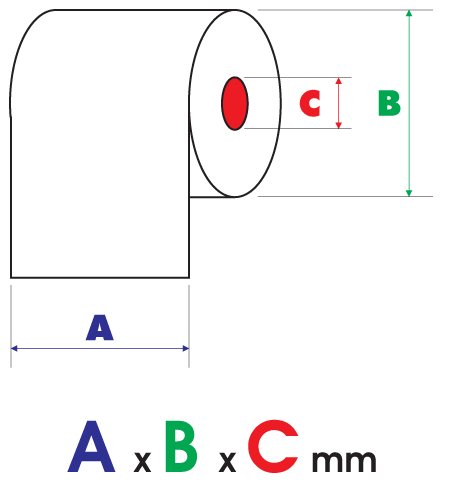
Kitchen impact printers commonly take 76mm wide rolls, which is narrower than the 80mm thermal rolls used at the till. Diameter and core size vary by printer, so measure your old roll or check the box. Match the width, the diameter and the core, not just the width on its own.