



Window Cleaning Supplies: A Starting Checklist for a New Round
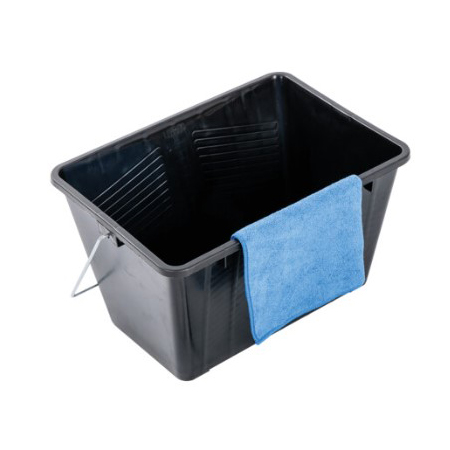
Window cleaning supplies for a new round start with five items: a squeegee, a washer or applicator, a bucket, scrims or microfibre cloths, and a glass cleaner. Add spare rubber blades from the first day. A water-fed pole comes later, once the work you win needs height.
What window cleaning supplies do you need to start a round?
A new round needs five things: a squeegee to clear the water, a washer or applicator to wet and loosen dirt, a bucket, scrims or microfibre cloths to detail the edges, and a glass cleaner or pure water. Buy spare rubber blades at the same time. That kit cleans almost any ground-level job.
Every one of those five does a separate job, so you cannot skip one and make up for it with another. The applicator wets and scrubs. The squeegee pulls the water and dirt off in one stroke. The scrim dries the edges and corners the blade cannot reach. Skip the scrim and your work looks unfinished at exactly the point a customer inspects it.
- Squeegee with a replaceable rubber blade.
- Spare rubbers to match that squeegee.
- Washer or applicator sleeve.
- Bucket, a sieve bucket if you can, for wringing the washer.
- Scrims or microfibre cloths for detailing.
- Glass cleaner for the wash water.
The background on each tool and what separates a good one from a cheap one is in squeegees, scrims and applicators, and the wider picture is in the window cleaning equipment buying guide.
What should you buy first on a tight budget?
Buy the squeegee first and buy a good one. It is the tool the finish depends on, and a quality handle keeps taking replaceable rubbers long after a cheap one has given up. After that, an applicator, a bucket, cloths and cleaner. A multi-piece set is often the simplest way to get all of it in one order.
The tempting mistake is spreading a small budget evenly across every item. Do the opposite. Spend on the squeegee, save on the bucket. Nobody has ever lost a customer over a plain bucket, but a worn or badly made blade leaves lines on the glass and the customer sees it from the pavement.
| Item | Day one | Later, when the work needs it |
|---|---|---|
| Squeegee and spare rubbers | Yes | Second size for small panes |
| Applicator or washer | Yes | Spare sleeve for wet weeks |
| Bucket | Yes | Sieve bucket, second bucket for rinse |
| Scrims and microfibre | Yes | Larger stock so you always have dry ones |
| Glass cleaner | Yes | Bulk container instead of small bottles |
| Extension or water-fed pole | No | Once you quote for upper-floor glass |
| Detailing blade or scraper | No | For paint, tape and builder marks |
Which supplies do you keep as spares?
Carry spare rubber blades, a spare applicator sleeve and more dry cloths than you think you need. These are the parts that wear out mid-round, and a worn blade or a soaked cloth turns a clean job into a streaky one. Keep them in the van, not at home.
Rubbers wear fastest. Grit on the glass and rough frames chew the edge, and once it nicks, every stroke leaves a line. Changing a blade takes seconds if the spare is with you and costs you the rest of the day if it is not. Cloths are the same story. A cloth that has already dried four windows just moves water around on the fifth.

When do you need a water-fed pole?
You need a water-fed pole once you take on glass you cannot safely reach from the ground with a handheld squeegee. It feeds purified water up the pole to a brush head, so upper-floor windows get cleaned from the pavement and dry spot-free. Until then, a handheld kit is enough.
Plenty of new rounds start on shopfronts, ground-floor houses and offices, all of which the basic kit handles. The pole is the upgrade that opens up domestic first-floor work and larger commercial sites. Buy it when a job you have actually been asked to quote needs it, not before. The two systems are compared in water-fed pole vs traditional window cleaning.
Kit out your round in one order
Squeegees, spare rubbers, applicators, scrims, buckets, poles and glass cleaner, at trade prices with fast Irish delivery from our Cavan warehouse.
How do you restock without overspending?
Restock in trade quantities from one supplier rather than buying single items from a hardware shop when something runs out. Order rubbers, cloths and glass cleaner together, keep one spare of every wearing part, and check stock on the same day each week so you never lose a morning to a missing blade.
Buying small and often is what quietly eats the margin on a round. A bulk container of glass cleaner and a pack of rubbers cost far less per use than the same items bought one at a time under pressure. Pick a fixed restock day, count what you have, and order once. For the full pro kit list and what to check before buying a set, see what's in a professional window cleaning kit.
Frequently asked questions
What window cleaning supplies do I need to start?
Five items cover a new round: a squeegee, a washer or applicator, a bucket, scrims or microfibre cloths, and a glass cleaner. Add spare rubber blades from the first day. That kit cleans shopfronts, ground-floor houses and offices, which is where most new rounds begin.
What should I buy first if my budget is small?
Buy the squeegee first and buy a good one, because the finish depends on it and a quality handle takes replaceable rubbers for years. Then an applicator, a bucket, cloths and cleaner. A multi-piece set is often the simplest way to get everything in a single order.
What can wait until later when kitting out a round?
A pole, a detailing blade or scraper, a second squeegee size and a rinse bucket can all wait. So can bulk containers of cleaner. Buy each one when a job you have actually been asked to quote calls for it, rather than kitting out for work you have not won yet.
Do I need a water-fed pole to start a window cleaning round?
No. A handheld squeegee kit handles shopfronts, ground-floor glass and interiors, which is most early work. Buy a water-fed pole once you are quoting for upper-floor or larger commercial glass you cannot safely reach from the ground with a handheld squeegee.
What spares should I carry in the van?
Carry spare rubber blades, a spare applicator sleeve and more dry cloths than you expect to need. Those are the parts that wear out mid-round. A worn blade or a soaked cloth turns a clean job into a streaky one, and the spare is only useful if it is with you.
How do I keep window cleaning supplies costs down?
Order in trade quantities from one supplier instead of buying single items from a hardware shop when something runs out. Buy rubbers, cloths and glass cleaner together, keep one spare of every wearing part, and check your stock on the same day each week.