



Window Cleaning Systems: Water-Fed Pole vs Traditional
Window cleaning systems come in two main types. Traditional cleaning uses a handheld squeegee, applicator and bucket, with the cleaner working right at the glass. A water-fed pole feeds purified water up a long pole to a brush head, so you clean high windows from the ground. Most working cleaners run both.
What is a water-fed pole system?
A water-fed pole system pushes purified water through a long telescopic pole to a brush head at the top. You scrub the glass with the brush while the water rinses it, then walk away. Because the water carries no minerals, the glass dries clear on its own with no squeegee and no cloth.
The pole does two jobs at once. The bristles loosen dirt and the water flow carries it off the pane and the frame. You never touch the glass with a blade, so there is no drying stage and no ladder for most upper-floor work. That is the real reason cleaners moved to poles. Working from the ground is safer and faster than setting a ladder for every window.
The water matters more than the pole. Ordinary tap water leaves the minerals behind as it dries, which is what spotting is. A filter takes those minerals out, so the water dries and leaves nothing. If the filtration is not doing its job, a pole system will spot the glass and you will blame the pole.
How does traditional window cleaning work?
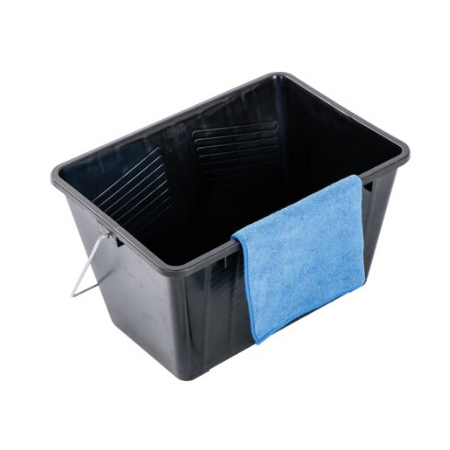
Traditional window cleaning uses three tools by hand. An applicator wets the glass and loosens the dirt, a squeegee pulls the water and dirt off in overlapping strokes, and a scrim or microfibre cloth dries the edges and corners. You work at the glass, so you see the result as you go.
Nothing beats it for a shopfront, an office interior, or any pane you can reach standing up. It is quick to set up, cheap to restock, and the finish is under your control from the first stroke. The squeegee rubber is the part that decides the result. A worn blade skips and streaks no matter how good your technique is, so carry spares.

The tools and what each one does are covered in squeegees, scrims and applicators.
Which window cleaning system should you choose?
Choose by the glass you clean. Ground-floor shopfronts, interiors and small jobs suit a traditional squeegee kit. Anything above head height, or a round of houses done on foot, suits a water-fed pole. If you clean both kinds of glass in a week, you will end up carrying both, and that is normal.
| Point | Traditional | Water-fed pole |
|---|---|---|
| Best for | Shopfronts, interiors, ground level | Upper floors, conservatories, commercial glass |
| Reach | Arm's length, or a ladder | From the ground, well above head height |
| Drying | Squeegee and scrim by hand | Dries on its own, pure water leaves nothing |
| Setup cost | Low, a few tools | Higher, pole plus filtration |
| Consumables | Rubbers, sleeves, cloths, glass cleaner | Filter media, brush heads |
| Frames and sills | Wiped by hand | Rinsed as you go |
| Indoors | Yes | No, water runs off the pane |
Neither system is the upgrade of the other. A pole cannot be used inside a shop, and a squeegee cannot reach a first-floor bay. Buy for the work in front of you. If you are starting out, the kit checklist for a new round sets out what to buy first.
What is a window cleaning van system?
A van system is a water-fed pole setup built into a vehicle. A tank holds the purified water, a pump feeds the pole through a hose reel, and a filter unit produces the water either at the van or back at base. It lets a cleaner work a full day of jobs without stopping to refill.
This is a professional round setup, not a shop purchase. If you clean a handful of windows a week, a pole fed from a portable trolley or a container is plenty. Once you are doing houses all day, the tank pays for itself in time saved. The cleaning part of the system does not change, only how the water gets to the pole.
Can you run both systems?
Yes, and most working cleaners do. The pole handles the outside and anything at height, the squeegee kit handles interiors and detail work. The two share a lot of your stock anyway, so keeping both ready costs you very little beyond the pole itself and its filtration.
A sensible van or store cupboard holds a quality squeegee with spare rubbers, an applicator sleeve or two, a sieve bucket, scrims and microfibre cloths, a glass cleaner for interiors, and the pole with a spare brush head. What a full professional kit looks like is listed in what's in a professional window cleaning kit. For the wider picture on tools, materials and technique, start at the window cleaning equipment buying guide.
Kit out either system
Squeegees, applicators, scrims, poles and complete sets, at trade prices with fast Irish delivery from our Cavan warehouse.
Frequently asked questions
What are the two main window cleaning systems?
The two main systems are traditional cleaning and water-fed pole cleaning. Traditional uses a handheld squeegee, applicator and bucket, with the cleaner working at the glass. A water-fed pole feeds purified water up a long pole to a brush head, so high windows are cleaned from the ground. Most professionals use both.
How does a water-fed pole system work?
A water-fed pole pushes purified water through a telescopic pole to a brush head. The bristles loosen the dirt while the water rinses it off the glass and frame. Because the water has had its minerals filtered out, the pane dries clear on its own with no squeegee and no drying cloth.
Is a water-fed pole better than a squeegee?
Neither is better, they suit different work. A water-fed pole wins on anything above head height because you clean from the ground instead of a ladder. A squeegee wins indoors, on shopfronts and on any pane you can reach, where it is faster to set up and cheaper to run.
What is a window cleaning van system?
A van system is a water-fed pole setup built into a vehicle. A tank carries the purified water, a pump feeds it up the pole through a hose reel, and a filter unit produces the water at the van or back at base. It suits cleaners working a full round every day.
Why does a water-fed pole leave the glass spot-free?
Spots are the minerals left behind when ordinary tap water dries. A water-fed pole system filters those minerals out first, so the water that rinses the glass leaves nothing when it evaporates. If a pole system starts spotting glass, the filtration usually needs attention rather than the pole.
Can you use a water-fed pole indoors?
No. A water-fed pole rinses the glass with running water and lets it dry, which means water runs down the pane, the frame and onto the floor. Indoor glass is cleaned traditionally with an applicator, a squeegee and a scrim or microfibre cloth to finish the edges.