


9V Batteries for Smoke Alarms and Equipment
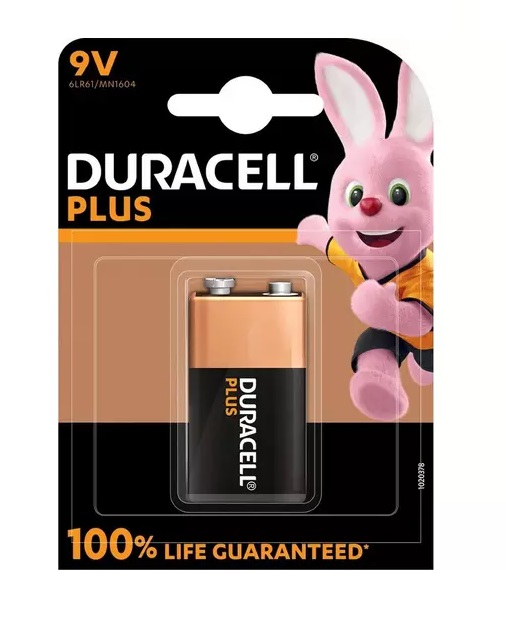
A 9V battery is the small rectangular cell with two snap terminals on top, also called a PP3. It gives 9 volts, six times the 1.5V of an AA, so it suits smoke alarms, detectors, meters and test equipment. Most smoke alarms that take a replaceable battery take a 9V.
What is a 9V battery?
A 9V battery is a small rectangular cell about the size of a matchbox, with a positive and a negative snap terminal side by side on the top face. Its proper name is PP3. It delivers 9 volts, well above the 1.5V of the round AA, AAA, C and D sizes, so it powers kit that needs more voltage from one cell.
The shape makes it easy to spot. Every other common household size is a cylinder. The 9V is the only flat-sided one, and the two snap studs on top only clip on one way round, so you cannot fit it backwards. You may see it sold as PP3, 6LR61, MN1604 or just "9 volt". They all mean the same battery.
Inside a standard alkaline 9V sit several small cells wired in series, each giving 1.5V, stacked until they add up to nine volts. That is why a 9V costs more than a single AA and why it is worth buying in packs rather than one at a time.
What battery does a smoke alarm take?
Most smoke alarms take a 9V (PP3) battery, the small rectangular one with two snap terminals, though some take AA cells and newer alarms have a sealed long-life lithium battery you do not replace. Check the back of your alarm, but 9V is the classic smoke-alarm battery and the one worth keeping spare.
Three types of alarm are common in Irish shops, offices and rented property:
- Battery-only alarms that run on a 9V you swap yourself. The cheapest to fit, the one that needs your attention.
- Mains alarms with a backup battery, wired to the building but holding a 9V or AA cell so the alarm still works in a power cut.
- Sealed alarms with a built-in lithium battery designed to last the life of the unit. Nothing to change, you replace the whole alarm at the end of its life.
If you look after a building, write down which type each alarm is. It turns a fire-safety check into a quick walk round instead of a hunt for the manual.
Why does my smoke alarm keep chirping?
A single chirp every minute or so nearly always means the battery is low. The alarm is telling you it has enough power to warn you, but not much more. Fit a fresh 9V and the chirp stops. If it carries on with a new battery, the alarm itself is faulty or past its service life.
Never take the battery out to stop the noise. An alarm with no battery is an alarm that cannot save anyone, and the flat cell tends to stay out far longer than anyone plans. Keep a couple of 9V batteries in the same drawer as the first aid kit, so replacing one is a two-minute job.
Chirps often start in the early hours because a cold room drops the battery voltage slightly. That is a sign the cell was already near the end, not a fault with the alarm.
What else uses a 9V battery?
Smoke alarms are the biggest use, but a 9V turns up across working kit:
- Carbon monoxide and heat detectors
- Multimeters and electrical test meters
- Moisture meters and thermometers
- Wireless microphones and guitar pedals
- Some intruder alarm sensors and door contacts
- Older calculators and label equipment
Anything with a terminal snap on a short lead almost certainly takes a 9V. The pattern is small devices that need more voltage than a cylinder cell gives, without room for a battery pack.
How does a 9V compare with AA and AAA?
The 9V gives six times the voltage of an AA, AAA, C or D, which are all 1.5V. It is not a bigger battery in energy terms though. A D cell holds far more energy at a lower voltage. Voltage and capacity are separate things, so match the battery to what the device asks for.
| Size | Voltage | Shape | Typical use |
|---|---|---|---|
| AAA | 1.5V | Slim cylinder | Remotes, keyboards, small scanners |
| AA | 1.5V | Cylinder | Scales, label guns, clocks |
| C | 1.5V | Fat cylinder | Mid-size torches |
| D | 1.5V | Large cylinder | Large torches, high-drain kit |
| 9V (PP3) | 9V | Rectangular, snap terminals | Smoke alarms, detectors, meters |
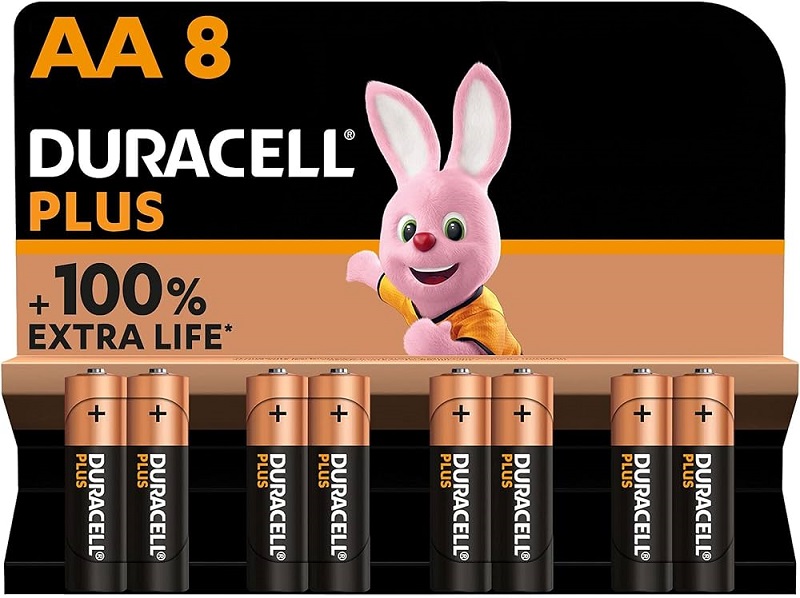
The cylinder sizes are covered in 1.5V batteries: AA, AAA, C and D, and the two biggest in C and D batteries explained. For the full picture across every size, start with the business batteries buying guide.
How should you buy and store 9V batteries?
Buy 9V batteries in packs rather than singly, and store them cool, dry and in their packaging until needed. Alkaline cells hold most of their charge for years in storage, so a small stock is money well spent. Keep the terminals covered so loose batteries cannot short against coins or keys.
The 9V needs one bit of care the round sizes do not. Both terminals sit on the same face, so a loose 9V rattling in a drawer with metal objects can short out and get hot. Leave them in the pack, or put a strip of tape over the terminals of any spare that is out of its packaging. Do the same with used ones before recycling.
For a business that gets through batteries in volume, the professional line is the cheaper way to buy the same chemistry. The difference between the retail and industrial grades is set out in Duracell Plus vs Procell.
Order 9V batteries for your business
Duracell 9V, AA, AAA, C and D, single packs to bulk, at trade prices with fast Irish delivery.
Frequently asked questions
What is a 9V battery?
A 9V battery is the small rectangular cell with two snap terminals on the top face, properly called a PP3. It gives 9 volts, six times the 1.5V of an AA, AAA, C or D. That higher voltage suits smoke alarms, detectors, test meters and similar equipment that needs more from a single battery.
Is a PP3 the same as a 9V battery?
Yes. PP3 is the technical name for the standard 9V battery, and you may also see it listed as 6LR61 or MN1604. They all describe the same rectangular cell with two snap terminals. If a device asks for any of those codes, a standard 9V battery is the right fit.
What battery does a smoke alarm take?
Most smoke alarms take a 9V (PP3) battery, the small rectangular one with two snap terminals, though some take AA cells and newer alarms have a sealed long-life battery you do not replace. Check the back of your alarm. Test alarms regularly and change the battery the moment it chirps.
Why is my smoke alarm chirping?
A single chirp roughly once a minute nearly always means the battery is low. Fit a fresh 9V and the chirping stops. Never remove the battery to silence it, because an alarm with no battery cannot warn anyone. If the chirp continues with a new battery, the alarm is faulty or past its service life.
What else uses a 9V battery?
Beyond smoke alarms, 9V batteries power carbon monoxide detectors, heat detectors, multimeters and electrical test meters, moisture meters, wireless microphones, guitar pedals, some intruder alarm sensors and older calculators. Any device with a snap connector on a short lead almost certainly takes a 9V.
How should I store spare 9V batteries?
Store them cool, dry and in their original packaging, and use older stock first. Both terminals sit on the same face, so a loose 9V can short against coins or keys and get hot. Keep spares in the pack, or tape over the terminals of any battery that is out of its packaging.