


Biodegradable vs Compostable Packaging: What Is the Difference?
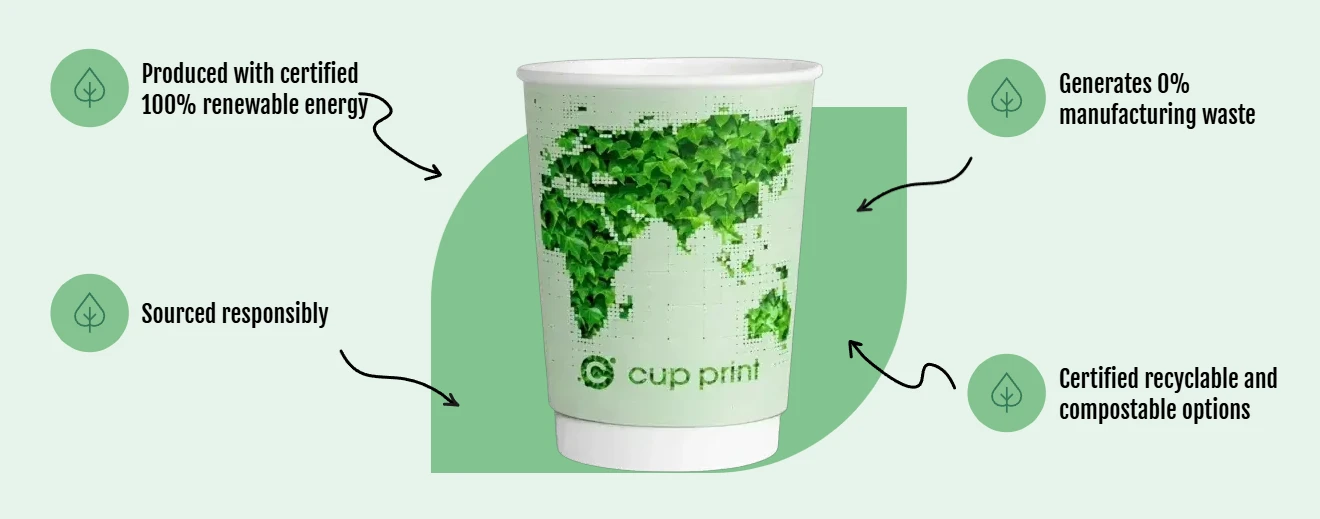
Compostable packaging is certified to break down into compost within a set time under defined conditions, to a standard such as EN 13432. Biodegradable only means an item will break down eventually, with no promise of how long it takes, what conditions it needs, or what is left behind. Compostable is the stronger claim.
What does compostable packaging mean?
Compostable packaging is packaging certified to break down into compost within a set time, under defined conditions, leaving no harmful residue. The usual standard is EN 13432. The certification is what makes the word mean something. It sets the time, the conditions and the end result, so the claim can be checked rather than trusted.
The word carries a second detail that many buyers miss. Most certifications cover industrial composting, which runs hotter and faster than a garden heap. A smaller number cover home composting. Both are real, but they are not the same promise. Bagasse, the moulded fibre left after sugarcane is pressed, is often certified for both. PLA cups and CPLA cutlery normally need the industrial route.
So there are two questions to ask about any compostable item. Is it certified, and for which process. Get those right and the green claim holds up. Skip them and you are buying a word.
What does biodegradable actually mean?
Biodegradable means microbes can break the material down. That is all it means. There is no time limit, no set of conditions and no test attached to the word. A biodegradable item might break down in months or in decades, and it might leave fragments behind. On its own the label tells you very little.
This is why the word turns up so often on packaging. It sounds green and it costs nothing to print. Some plastics are sold as biodegradable because an additive helps them fragment. Fragmenting is not the same as composting. The pieces get smaller and stay plastic.
Treat biodegradable as a starting point for a question, not as an answer. Ask what it breaks down into, how long it takes and who tested it. A supplier with a certified product will answer straight away.
Biodegradable vs compostable: what is the real difference?
The two words sit on a scale. Compostable is the tighter end of it. Here is the practical comparison.
| What you get | Biodegradable | Compostable |
|---|---|---|
| Time limit | None stated | Set by the standard |
| Conditions | Not defined | Defined, home or industrial |
| Tested | Usually not | Yes, certified to EN 13432 or similar |
| End result | Unknown, can leave fragments | Compost, no harmful residue |
| What to do with it | Usually general waste | Composting route, where accepted |
The short version: all compostable items are biodegradable, and most biodegradable items are not compostable. If a product page says biodegradable and nothing else, ask for the certification. If none exists, price it as ordinary packaging, because that is what it is.
Is compostable always the better choice?
Not always. Compostable packaging only delivers its benefit if it reaches a facility that can process it. A certified compostable cup in a general waste bin is treated as general waste. For clean paper, card and some plastics, recycling can be the better route, so match the material to the bin your business actually has.
Sort out the disposal side before you switch. Ask your waste collector what they accept, then label your bins so staff and customers use the right one. Not every Irish brown-bin service takes packaging. The rules on that are set out in brown bin or green bin, disposing of compostable packaging in Ireland.
Does the difference matter to your customers?
It matters more than it used to. Customers read packaging now, and staff get asked which bin an item goes in. A vague biodegradable claim invites the question and gives you no good answer. A certified compostable line lets you say what the item is made from, what it breaks down into and where it should go.
It also protects you. Green claims that cannot be backed up are treated as misleading, and a small sign in a cafe counts as a claim. Naming the material and the standard keeps you on solid ground, and it reads as more honest than a leaf logo.
Keep the message short. Something like "our cups and cutlery are certified compostable, please use the bin marked for them" does the job on a counter card.
How do you spot a genuine compostable claim?
Look for a named standard and a certification logo, not an adjective. A genuine compostable product states the standard it meets, such as EN 13432, and says whether the certification covers home or industrial composting. Vague wording like eco-friendly, green or plant-based on its own proves nothing about how the item breaks down.
A quick checklist before you order:
- Is a standard named, such as EN 13432, or only the word biodegradable.
- Does it say home or industrial composting.
- Is the material clear, PLA, bagasse, kraft or CPLA, rather than just "bioplastic".
- Is it PFAS-free, so the grease-proofing is clean too.
- Can the supplier send the certificate if you ask.
Which material suits which job is compared in PLA vs bagasse vs kraft, and the cup question is answered in are compostable cups really compostable. For the wider picture, start with the compostable foodservice packaging guide.
Certified compostable packaging, delivered
Bagasse containers, PLA cups, wooden and CPLA cutlery, kraft boxes and bags, at trade prices with fast Irish delivery.
Frequently asked questions
What does compostable packaging mean?
Compostable packaging is certified to break down into compost within a set time, under defined conditions, leaving no harmful residue. The usual standard is EN 13432. The certification is what gives the word meaning, because it fixes the time, the conditions and the end result rather than leaving them open.
What is the difference between biodegradable and compostable?
Biodegradable just means something will eventually break down, with no guarantee of how long or into what. Compostable is stricter: it must break down into compost within a set time under defined conditions, and is certified to a standard such as EN 13432. In short, all compostable items are biodegradable, but not all biodegradable items are compostable.
Is biodegradable packaging any good?
It depends entirely on what is behind the word. Biodegradable has no time limit, no defined conditions and usually no test, so on its own it proves very little. Some biodegradable plastics only fragment into smaller pieces of plastic. Ask for a named standard, and treat uncertified biodegradable items as ordinary packaging.
Are all compostable items biodegradable?
Yes. Compostable is a tighter version of biodegradable, so anything certified compostable will also biodegrade. It does not work the other way round. Most items sold as biodegradable are not compostable, because they have never been tested against a composting standard such as EN 13432.
Does plant-based mean compostable?
No. Plant-based describes what the material is made from, not how it breaks down. An item can be made from plant starch and still need an industrial composting facility, and some plant-based plastics are not certified compostable at all. Look for a named standard such as EN 13432 rather than the raw material.
How can I tell if packaging is really compostable?
Look for a named standard and a certification logo rather than an adjective. A genuine product states the standard it meets, such as EN 13432, and says whether the certification covers home or industrial composting. Words like eco-friendly, green or plant-based prove nothing on their own, so ask the supplier for the certificate.