


How to Replace a Kentucky Mop Head

Replacing a Kentucky mop head takes seconds. Release the clip or unscrew the metal clamp on the handle, pull the worn head off, slide the stitched band of the new head into the fitting, and close it again. Check the head is held firm before you use it. Keep the handle, replace only the head.
How do you replace a Kentucky mop head?
To replace a Kentucky mop head, stand the handle upright and open the fitting at the end. A clip fitting springs open by hand. A clamp fitting unscrews with a wing nut or a screwdriver. Pull the old head off, slide the stitched band of the new head into the fitting, and close or tighten it again.
Work through it in order and you will not get it wrong.
- Wear gloves. A used mop head holds dirty water and you do not want it on your hands.
- Stand the mop with the head on the floor, or lay it flat on a bench. Do not do this over a clean floor.
- Open the fitting. Squeeze or lever the spring clip, or loosen the clamp screw a few turns.
- Pull the old head out and bin it, or bag it for washing if it still has life left.
- Take the new head and find the stitched band across the top of the strands.
- Slide the band into the open clip or clamp, centred so the strands hang evenly on both sides.
- Close the clip until it snaps, or tighten the clamp screw until the band cannot slide.
- Give the head a firm tug downwards. If it moves, open the fitting and seat the band again.
That is the whole job. Once you have done it once you will do the next one in under a minute.
What kind of fitting does your mop handle have?
Kentucky handles use one of two fittings. A clip handle has a sprung metal or plastic jaw that opens by hand and snaps shut on the band. A clamp handle has a flat metal plate held by a screw or wing nut, which you loosen, slot the band under, then tighten. Look at the end of your handle to tell which you have.
Neither is better for cleaning. The clip is faster to change, the clamp holds a heavy wet head a little more firmly over time. Both take the same standard banded Kentucky heads, so you do not need to match a brand.
| Fitting | How it opens | Notes |
|---|---|---|
| Spring clip | Squeeze or lever open by hand | Fastest to change, no tools needed |
| Screw clamp | Loosen the screw or wing nut | Grips heavy wet heads well, may need a screwdriver |
If you are still choosing a handle and head type, read Kentucky vs socket vs sponge mops. Socket mops fit a different way, by screwing onto the handle rather than clamping a band.
Which way round does the head go on?
The stitched band across the top of the strands is the part that goes into the fitting. The loose strands hang down. Centre the band so the head sits level and the strands spread evenly either side of the handle. If the head hangs off to one side, it will drag unevenly and wear out faster.
The mistake to avoid is clamping the strands themselves instead of the band. It feels tight when you close the fitting, then the strands tear free the first time you wring the mop. If your new head has a fabric loop or a wider tape band, that is the part to grip.
How often should you replace a Kentucky mop head?
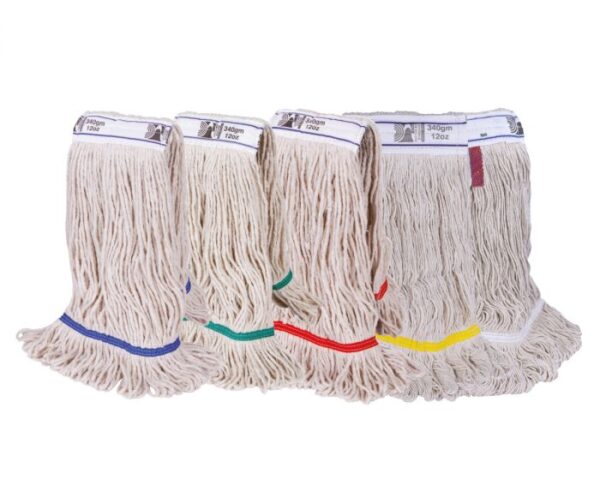
Replace the head when the strands thin out, fray at the ends, stay grey after washing, hold a smell, or stop soaking up water properly. In a busy kitchen or shop that comes round far quicker than in a quiet office. Judge the head, not the calendar, and swap it as soon as it stops cleaning well.
You can stretch a head's life. Rinse it out after every use, wring it properly, and hang it strands-down so it dries instead of sitting wet in a bucket. A head left damp in a corner goes sour and spreads more than it lifts. Wash cotton and microfibre heads regularly on a hot wash where the maker allows it.
Also swap the head when you change area. A green head used in the kitchen does not go into the washroom, no matter how clean it looks. That is the whole point of the colour system, covered in mop head colour coding for food-safe cleaning.
Replacement Kentucky mop heads
Cotton and microfibre Kentucky heads in a range of weights and colour-coded options, at trade prices with fast Irish delivery from our Cavan warehouse.
How many spare heads should you keep?
Reorder the same banded Kentucky head you already run, in the same weight and colour, and keep at least one spare per colour-coded area on the shelf. Matching what is already on the handle means no fitting surprises, and a spare in the cupboard is what turns a worn head into a swap rather than a job put off.
Buy spares in a batch rather than one at a time. A head sitting on the shelf next to the mop gets changed. A head that has to be ordered first does not, and staff carry on using a mop that has stopped working until it arrives.
Changing the weight or the material is a separate decision from replacing a worn head, and it is worth making deliberately rather than at reorder time. The trade-offs between head weights, cotton and microfibre are set out in Kentucky mop vs socket vs sponge. The full floor-care setup is in the commercial mops and buckets buying guide.
Frequently asked questions
How do you replace a Kentucky mop head?
Open the fitting at the end of the handle, either by springing the clip open or loosening the clamp screw. Pull the old head off, slide the stitched band of the new head into the fitting, centre it, and close or tighten it again. Tug the head downwards to check it is held firm before you use it.
What fitting does a Kentucky mop handle use?
Kentucky handles use either a spring clip or a screw clamp. The clip is a sprung jaw you open by hand and snap shut on the band. The clamp is a flat plate held by a screw or wing nut that you loosen, slot the band under, then tighten. Both take the same standard banded Kentucky heads.
Which part of the mop head goes into the clip?
The stitched band across the top of the strands is the part that goes into the clip or clamp. The strands hang loose below it. Never clamp the strands themselves, because they tear free the first time you wring the mop. Centre the band so the head hangs level on both sides of the handle.
How often should you replace a Kentucky mop head?
Replace the head when the strands thin, fray, stay grey after washing, hold a smell, or stop absorbing water well. Busy kitchens and shop floors wear heads out much faster than quiet areas, so judge the head rather than the date. Rinsing, wringing and drying the head after use makes it last longer.
Can you wash a Kentucky mop head instead of replacing it?
Yes. Cotton and microfibre Kentucky heads can be machine washed where the maker allows it, and washing between uses keeps them hygienic and extends their life. Once the strands thin, fray or stop holding water, washing will not bring the head back and it needs replacing.
Do you need a new handle when the mop head wears out?
No. The head is the consumable part and the handle lasts for years. Replace only the head, matching the weight and colour you already use. Keeping spare heads for each colour-coded area means a worn or soiled head is a quick swap rather than a job left undone.