


Mop Bucket with Wringer: Single vs Double Bucket Systems
A mop bucket with a wringer is a cleaning bucket with a press fitted to the rim, so you squeeze the water out of the mop without touching it. A single bucket holds one chamber of solution. A double bucket splits clean solution and dirty rinse water, which keeps dirt off the floor.
What does a mop bucket with a wringer actually do?
A wringer squeezes the dirty water out of the mop head for you. You drop the mop into the press, push the handle, and the water runs back into the bucket. That leaves the mop damp rather than soaking, so the floor dries quickly and your hands never go near the water.
Wringing by hand is slow, messy and a hygiene problem. It also leaves the mop too wet, and a floor left swimming in water takes ages to dry, stays slippery and picks dirt straight back up. A wringer fixes all three at once, which is why every commercial floor kit is built around one.
The mop itself matters just as much as the bucket. The mops and buckets buying guide covers the full setup, and Kentucky vs socket vs sponge mops covers which head to put on the handle.
Single or double mop bucket, which should you buy?
A single bucket has one chamber and a wringer, and it is fine for small areas and light use. A double bucket has two chambers, one for clean solution and one for the dirty rinse, with the wringer between them. You wring into the dirty side and reload from the clean side, so you stop putting dirt back on the floor.
With a single bucket, every wring puts the dirt back into the same water you are about to mop with. The first pass is clean. The later ones are not. On a small office or a single toilet block that is acceptable, because you can change the water often without losing much time.
In a kitchen, a food area or a busy shop floor, the double bucket earns its place. The clean side stays clean, so the last square metre gets the same wash as the first. It also means fewer trips to the sink, which on a big floor saves real time.
| Single bucket | Double bucket | |
|---|---|---|
| Chambers | One | Two (clean and dirty) |
| Best for | Small areas, offices, light use | Kitchens, food areas, busy shop floors |
| Water changes | Often | Fewer |
| Hygiene | Basic | Better, dirt stays out of the clean side |
| Footprint | Smaller, easier to store | Larger, usually on wheels |
Which wringer type suits your mop?
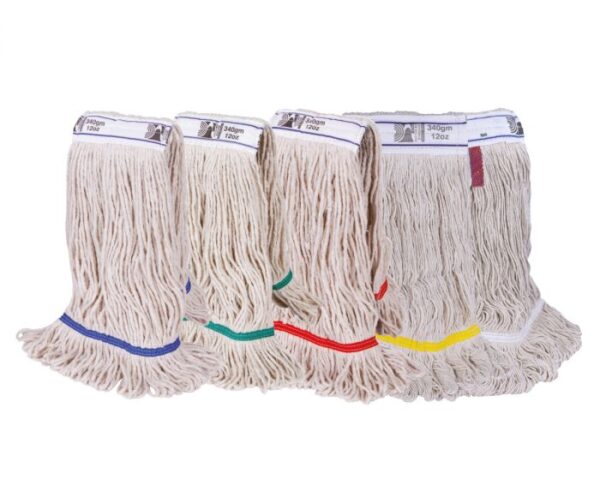
The wringer has to fit the mop head. A Kentucky mop has a wide banded head, so it needs a broad press wringer with room to take it. A socket mop has a smaller head and works with a narrower cone or funnel wringer. Buying a wringer that will not take your mop head is the most common mistake.
Two shapes cover most jobs. A down press wringer sits on the rim and squeezes the mop flat with a handle you push down. It suits the flat banded Kentucky head. A cone or funnel wringer twists a narrower head against a tapered opening, which suits socket and string mops.
- Check the mop head size first, then choose the bucket, not the other way round.
- Look for a wringer fixed to the bucket rather than a loose insert that lifts out under load.
- A long handle takes less effort and is kinder on wrists over a full shift.
What size mop bucket do you need, and do you need wheels?
Pick the smallest bucket that covers your floor without constant refills. A small single bucket suits an office or a cafe. A larger double bucket suits a kitchen, a shop floor or a corridor. Wheels are worth it as soon as you are carrying a full bucket more than a few metres, because full buckets are heavy and they spill.
A full bucket of water is heavy enough to be a lifting risk and a slip risk at the same time. Castors turn that carry into a push. Most double buckets come on wheels for exactly this reason. For larger sites, a mop trolley adds the bucket, wringer, a place for the handle and often a bin bag holder on one frame.
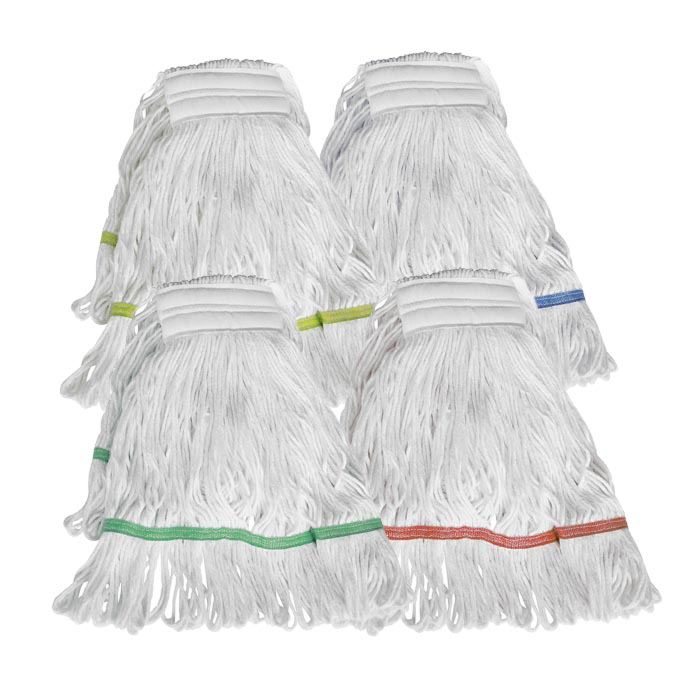
One more sizing rule. Buy a bucket per area, not one bucket for the building. Colour-coding only works if each zone has its own bucket to go with its own mop head, which is covered in mop head colour coding for food-safe cleaning.
Mop buckets, wringers and trolleys
Single and double wringer buckets, colour-coded mop heads, handles and trolleys, at trade prices with fast Irish delivery from our Cavan warehouse.
How do you keep a mop bucket clean and safe?
Empty the bucket after every use, rinse both chambers, and store it upside down or tipped so it dries out. Water left standing in a bucket goes stale and smells, and it puts that smell straight back on your floor next time. Wash the mop head too, and hang it to dry rather than leaving it in the bucket.
A few habits keep the whole kit working:
- Sweep first. Mopping over grit just turns it into mud and wears the head out.
- Change the water when it looks dirty, not when the job ends.
- Put out a wet floor sign while the floor dries.
- Keep a spare head per colour so a worn one is a quick swap.
- Store the mop head off the ground so air gets to it.
Dry floor care matters as much as wet. Brooms, sweepers and squeegees are covered in floor sweepers, brooms and squeegees.
Frequently asked questions
What is a mop bucket with a wringer?
A mop bucket with a wringer is a cleaning bucket with a press fitted to the rim. You put the mop head into the press and push the handle, and the water is squeezed back into the bucket. It leaves the mop damp instead of soaking, so floors dry faster and your hands stay out of the dirty water.
What is the difference between a single and a double mop bucket?
A single mop bucket has one chamber and a wringer, so the dirty water goes back into the same solution you mop with. A double mop bucket has two chambers, one for clean solution and one for the dirty rinse, with the wringer between. You wring into the dirty side and reload from the clean side.
Do I need a double mop bucket?
You need a double mop bucket if you clean a kitchen, a food area or a busy shop floor, because the clean side stays clean and the last part of the floor gets the same wash as the first. For a small office or a single toilet block, a single bucket with frequent water changes is enough.
Which wringer works with a Kentucky mop?
A Kentucky mop has a wide flat banded head, so it needs a broad down press wringer with an opening large enough to take it. Narrow cone or funnel wringers are made for smaller socket and string mop heads. Always check the mop head size before you choose the bucket.
Does a mop bucket need wheels?
Wheels are worth it as soon as you carry a full bucket more than a few metres. A bucket full of water is heavy to lift and easy to spill, and both are safety risks. Castors turn the carry into a push. Most double buckets come on wheels, and larger sites often use a mop trolley instead.
How do you clean a mop bucket?
Empty the bucket after every use, rinse both chambers out, and store it tipped or upside down so it dries. Standing water goes stale and puts that smell back on your floor. Wash the mop head as well and hang it to dry rather than leaving it sitting in the bucket.