

Mop Head Colours Explained: Colour Coding for Food Safety
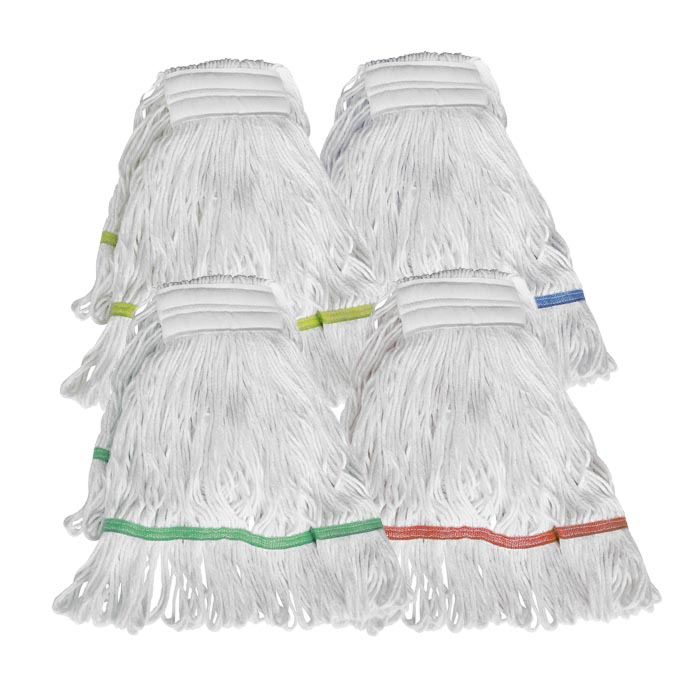
Mop head colours tell staff which area each mop is for, so germs never travel between zones. The usual system is red for washroom floors and toilets, yellow for washroom surfaces and basins, green for kitchens and food areas, and blue for general low-risk areas like shop floors and offices.
What do the different mop head colours mean?
Each mop head colour is tied to one area of the building. Red covers washroom floors and toilets. Yellow covers washroom surfaces, sinks and basins. Green covers kitchens and food preparation areas. Blue covers general low-risk areas such as shop floors, corridors and offices. The colour is the instruction, so nobody has to guess.
The point is simple. A mop that has been round a toilet floor should never touch the floor a chef stands on. Colour-coding turns that rule into something a new staff member can follow on day one, without training, without a written sheet, and without asking anyone.
| Colour | Area | Risk level |
|---|---|---|
| Red | Washroom floors and toilets | High |
| Yellow | Washroom surfaces, sinks and basins | High |
| Green | Kitchens and food preparation areas | Food contact |
| Blue | General areas, shop floors, offices | Low |
Red and yellow are both washroom colours, split by height. Red works at floor level where the dirtiest work happens. Yellow works above it, on basins, taps and hand-contact surfaces. Keeping the two apart stops toilet-floor bacteria reaching the sink where people wash their hands.
Why does colour coding matter for food safety?
Colour coding stops cross-contamination, which is the movement of bacteria from a dirty area to a clean one on shared equipment. A mop carries water, dirt and bacteria in its strands. Use the same mop in a toilet and a kitchen and you have moved the toilet into the kitchen. Separate colours break that path.
Food inspectors look for this. A kitchen with one grey mop for everything is a problem they can see in seconds. A green mop hanging on a green-labelled hook next to a green bucket answers the question before it is asked. It shows you have a system, not just clean intentions.
It helps staff too. Cleaning is often done at the end of a long shift, in a hurry, by whoever is left. Colour is the one instruction that still works when people are tired. There is nothing to read and nothing to remember.
Does the whole set need to match, or just the mop?
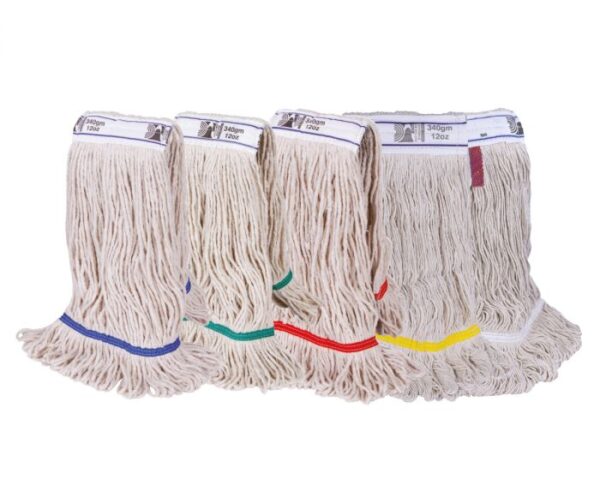
The whole set should match. Colour-code the mop head, the bucket, the cloths and the gloves for each area. A green mop wrung out in a red bucket has been contaminated, and the system has failed quietly. Matching every item in the set is what makes the colour actually mean something.
A working set for one area looks like this:
- Mop head in the area colour, plus at least one spare
- Bucket and wringer in the same colour, or clearly labelled
- Cloths in the same colour for surfaces
- A dedicated storage spot so sets never get mixed on the shelf
Storage is where most systems break. If all four mops lean in the same corner overnight, dirty strands touch clean ones and the colour was pointless. Hang them separately, heads up, and let them dry. The same colour logic applies to cloths, covered in colour-coded cleaning: the cloth colour system.
Order colour-coded mop heads
Kentucky mop heads in red, yellow, green and blue, plus matching buckets and handles, at trade prices with fast Irish delivery from our Cavan warehouse.
How many colours does a small business need?
Most small shops and cafes need three colours, not four. Green for the kitchen or food area, red for the washroom, and blue for everything else. Add yellow when washroom surfaces and basins are cleaned often enough to justify a separate set. Start with three and grow the system as the site grows.
A cafe with one toilet and one kitchen does fine on three. A restaurant with staff and customer washrooms usually wants the full four. A shop with no food preparation might only need red and blue. Buy for the areas you actually have, then keep spare heads so a worn one never forces someone to grab the wrong colour.
Whatever the count, use the same colour meanings as everyone else. Inventing your own scheme means agency staff, new hires and inspectors all read it wrong.
How do you set up a colour-coded system?
Walk the building and list the distinct areas first. Assign a colour to each one using the standard table above. Buy a mop head, a bucket and cloths in that colour for every area, plus a spare head each. Then give each set a fixed storage place, labelled in its own colour, and put a small chart on the store cupboard door.
Tell staff the rule once, in one line: the mop colour matches the area colour, and nothing crosses over. Check the store cupboard now and then. If a green head is sitting in a red bucket, someone needs reminding, and it is easier to fix that than to fail an inspection.
Heads are consumables, so replace them rather than the whole mop. The steps are in how to replace a Kentucky mop head, and the head and bucket choices themselves are covered in Kentucky vs socket vs sponge mops and mop buckets with wringers. For the wider setup, see the commercial mops and buckets buying guide.
Frequently asked questions
What do mop head colours mean?
Each mop head colour marks one cleaning area so germs do not travel between zones. Red is for washroom floors and toilets, yellow for washroom surfaces and basins, green for kitchens and food preparation areas, and blue for general low-risk areas such as shop floors, corridors and offices.
What colour mop is used in a kitchen?
Green is the kitchen and food preparation colour. Keeping a green mop, green bucket and green cloths in the kitchen, and never using them anywhere else, stops bacteria from washrooms or general areas reaching food surfaces and floors. It is the single most important colour rule to enforce.
Why are red and yellow both used in washrooms?
Red and yellow split the washroom by height. Red handles floors and toilets, where the dirtiest work happens. Yellow handles surfaces above that, including sinks, basins and taps. Keeping them apart stops bacteria from the toilet floor reaching the basin where people wash their hands.
Do buckets and cloths need to be colour coded too?
Yes. The mop, bucket, cloths and gloves for one area should all share the same colour. A green mop wrung out in a red bucket has already been contaminated, so the colour on the mop head alone means nothing. Matching the full set is what makes the system work.
How many mop colours does a small business need?
Most small shops and cafes need three colours. Green for the kitchen or food area, red for the washroom, and blue for everything else. Add yellow when washroom surfaces and basins are cleaned often enough to need their own set. Buy for the areas you actually have.
How should colour-coded mops be stored?
Store each colour separately, hung with the head up so it dries, and never leaning together in one corner. Wet heads touching each other pass dirt between colours and undo the system. Give each set a fixed, labelled spot and keep a spare head for every colour.