


Kentucky Mop vs Socket vs Sponge: Which Mop for Your Floor?

Kentucky mops have a flat banded head clipped to the handle. They hold a lot of water and cover large floors fast, so they are the commercial standard. Socket mops have a smaller head that fixes on by a socket, lighter and better for small areas and edges. Sponge mops suit light or specific jobs.
What is a Kentucky mop, and why do shops use it?
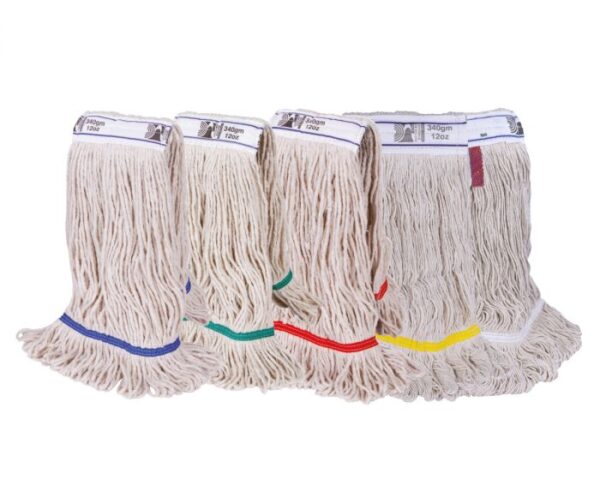
A Kentucky mop is the flat, heavy mop head used in most commercial cleaning. Banded cotton or microfibre strands are stitched into a flat band that clips onto the handle. It holds a lot of water and covers a wide path in one sweep, which is why shops, kitchens and facilities pick it over a domestic mop.
The shape does the work. A flat head lays a wide strip of floor at a time, so you cross a big room in fewer passes. The strands are thick and long, so the head carries plenty of cleaning solution before you need to go back to the bucket. Both of those add up to less walking and less time per clean.
Kentucky heads come in different weights and materials. A heavier head holds more water and suits large hard floors. A lighter head is easier on the wrist for shorter shifts. Cotton is absorbent and cheap to replace. Microfibre picks up fine dirt well and dries faster. There is more on the whole setup in the commercial mops and buckets buying guide.
What is a socket mop, and when is it better?
A socket mop has a smaller head that fixes onto the handle by a socket, either screwed or pushed on. It is lighter than a Kentucky, easier to move around furniture, and better for smaller areas and edges. Washrooms, store rooms, stairs and tight kitchen corners are where a socket mop beats a Kentucky.
The fitting is the main difference you feel day to day. There is no clip or clamp to open. The head screws or pushes straight onto the handle, so a swap takes seconds and there is no metal jaw to seize up. Staff who find a full Kentucky head heavy usually get on better with a socket mop.
The trade-off is coverage. A smaller head means less water carried and more passes to do the same floor. On a large shop floor that adds real time. Many businesses run both, a Kentucky for the main floor and a socket mop for washrooms and back rooms.
What about sponge mops?
A sponge mop uses a flat sponge head instead of strands, usually with a built-in squeeze or roller wringer. It suits light or specific jobs: a small spill, a smooth vinyl floor, a tight area behind a counter. It is not the mop to run a busy commercial floor with, because the sponge holds little water and wears quickly.
Sponge heads are fine as a second tool. Keep one for quick wipe-ups so you are not filling a full bucket for a small mess. Just do not expect it to replace a Kentucky on a kitchen floor at the end of service.
Kentucky vs socket vs sponge: how do they compare?
| Mop type | Head fitting | Water capacity | Best for |
|---|---|---|---|
| Kentucky | Banded head, clip or metal clamp | High | Large shop, kitchen and warehouse floors |
| Socket | Screw or push-on socket | Medium | Washrooms, store rooms, stairs, edges |
| Sponge | Sponge head on handle | Low | Small spills and light, specific jobs |
Read the table by area, not by price. Pick the mop that matches the biggest floor you clean, then add a second type for the awkward spaces.
Which mop should you buy for your business?
Match the mop to the floor. A shop, cafe, kitchen or warehouse floor wants a Kentucky mop on a wringer bucket. A washroom, small back room or stairwell wants a socket mop. Keep a sponge mop for small spills. Most businesses need at least two types, in separate colours for separate areas.
- Shop floor or warehouse. Kentucky, heavier head, blue for general areas.
- Kitchen or food prep. Kentucky, green head, kept only for that area.
- Washrooms and toilets. Socket or light Kentucky, red head, never used elsewhere.
- Behind counters and tight corners. Socket or sponge, whichever your staff prefer.
Colour matters as much as shape. Keeping a separate coloured mop per area is how you stop germs moving from the toilet to the kitchen. The full system is set out in mop head colour coding for food-safe cleaning.
Buy Kentucky mop heads by the box
Kentucky and socket mop heads in every colour and weight, plus handles, clips and wringer buckets, at trade prices with fast Irish delivery.
Do the different mops need different buckets and handles?
Kentucky and socket mops both use a mop bucket with a wringer, and most standard wringers take either head. The handle is what changes. A Kentucky handle ends in a clip or metal clamp that grips the flat band. A socket handle ends in a threaded or tapered tip that the head fits onto. Buy the handle to match the head.
That is the mistake to avoid when reordering. Staff order a head, it arrives, and it will not fit the handles already in the store cupboard. Check the fitting on your existing handles before you order, or order handles and heads together as a set.
On the bucket side, a single bucket is fine for a small area and a double bucket keeps clean solution apart from dirty rinse water, which cleans more hygienically. The comparison is in mop buckets with wringers: single vs double bucket systems, and swapping a worn head is covered step by step in how to replace a Kentucky mop head.
Frequently asked questions
What is a Kentucky mop?
A Kentucky mop is the flat, heavy mop head used in most commercial cleaning, made of banded cotton or microfibre strands and clipped to a handle. It holds a lot of water and covers large floors quickly, which is why shops, kitchens and facilities use it with a mop bucket and wringer rather than a domestic mop.
What is the difference between Kentucky and socket mops?
A Kentucky mop has a flat banded head held by a clip on the handle, ideal for large commercial floors and high water capacity. A socket mop has a smaller head that fixes onto the handle by a socket, lighter and better for smaller areas and edges. Kentucky is the workhorse, socket mops suit lighter, tighter jobs.
Is a Kentucky mop better than a socket mop?
Neither is better on its own, it depends on the floor. A Kentucky mop covers large open floors faster and carries more water, so it suits shop floors, kitchens and warehouses. A socket mop is lighter and easier around furniture, edges, stairs and washrooms. Many businesses keep both and use each where it works best.
What are Kentucky mop heads made of?
Kentucky mop heads are usually made of cotton or microfibre strands stitched into a flat band. Cotton is absorbent and cheap to replace. Microfibre picks up fine dirt well and dries faster between uses. Heads also come in different weights, with heavier heads holding more water for larger floors.
Can you use a Kentucky head on a socket handle?
No. The fittings are different. A Kentucky head has a flat band that grips into a clip or metal clamp on the handle, while a socket head fits onto a threaded or tapered handle tip. Check the fitting on your existing handles before reordering heads, or buy heads and handles together as a set.
Which mop is best for a kitchen floor?
A Kentucky mop on a wringer bucket is the usual choice for a kitchen floor, because it holds plenty of solution and covers the area quickly. Use a green head kept only for food areas, and never move it to washrooms or general floors. Keep a spare green head so a worn one can be swapped straight away.