

1-Line vs 2-Line Price Guns: Which Does Your Shop Need?
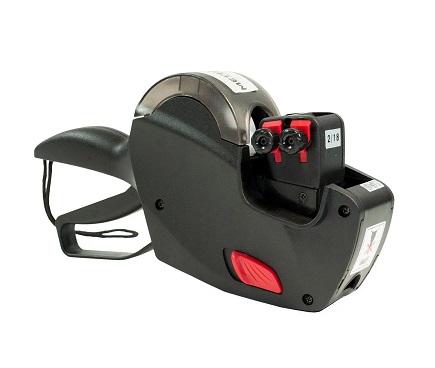
A 1-line price gun prints one line, normally the price, and covers what most shops do all day. A 2-line gun prints two lines, so you can add a date, a product code, or a was-and-now offer price. Buy 2-line if you date-mark stock or run offers. Otherwise 1-line is simpler and cheaper.
What is the difference between a 1-line and a 2-line price gun?
The difference is how many lines the gun prints on one label. A 1-line gun prints a single row of characters, usually the price. A 2-line gun prints two rows, so the label carries a second piece of information above or below the price. Both work the same way otherwise, one squeeze prints and applies the label.
Inside the gun is a set of number bands. You turn them to set what gets printed. A 1-line gun has one set of bands. A 2-line gun has two, stacked, and each one is set on its own. That is the whole mechanical difference. If you want the print and feed mechanism in full, read how do pricing guns work.
What can you print on the second line?
The second line holds anything short you need beside the price. Shops most often use it for a date, either the day the item was priced or a use-by date, a product or batch code for stock control, or a previous price so a promotion reads as a clear reduction on the shelf edge.
Common uses of the second line:
- Date marking, so you can see at a glance how long stock has been sitting.
- Was and now pricing, with the old price on one line and the offer price on the other.
- Product or department codes, handy where several lines look alike.
- Batch or delivery references, useful when you rotate stock by delivery.
If none of that applies to your shop, the second line sits unused and you have paid for a feature you never touch. Watch how your staff price stock for a week before you decide. If every label they print is a bare price, one line is enough. If someone is writing a date on by hand after the label goes on, a 2-line gun removes that step.
Keep in mind that both lines are limited to the characters on the gun's bands. You get numbers, a currency symbol and a few common marks. It is a pricing tool, not a printer, so plan the second line around short entries like 12 07 26 or a three-digit code.
Which one should your shop buy?
Buy a 1-line gun if you only ever put a price on the shelf. Buy a 2-line gun if you date-mark stock, run regular promotions, or need a code beside the price. Small shops with simple pricing are well served by 1-line. Food retailers and shops with frequent offers get more out of 2-line.

| 1-line price gun | 2-line price gun | |
|---|---|---|
| Prints | One line, normally the price | Two lines, price plus date, code or old price |
| Number bands to set | One set | Two sets |
| Speed of a price change | Faster, fewer bands to turn | Slower, two lines to set |
| Best for | Plain shelf pricing, small shops | Date marking, promotions, stock codes |
| Cost | Lower | Higher |
There is no rule that says you pick one type for the whole shop. Both take the same kind of consumable, a roll of self-adhesive labels, so running a mix adds no real complication as long as you order the correct label size for each gun.
Cost is worth a quick word. A 2-line gun costs more than a 1-line gun of the same make, and the taller labels it takes usually cost a little more per roll too. That gap is small on a single purchase and adds up over a year if you label heavily, so buy the second line because you need it, not in case you might.
Do 1-line and 2-line guns take the same labels?
Not always. Labels are matched to the gun make and model, and the size is what matters most, such as 26 x 12mm or 22 x 12mm. A two-line gun usually needs a taller label so both lines fit. Check the model on your gun, or the box the last labels came in, before you order.
This is worth settling before you buy the gun rather than after. A gun whose labels are awkward to source becomes the gun nobody wants to reload, and you end up back at writing prices by hand. Ask what label size a model takes and whether that size is a stock item before you commit to it.
Once the size is right, colour and adhesive are the remaining choices, and both are set out in price gun labels: sizes, colours and which fit your gun.
Buy a price gun with labels to match
1-line and 2-line price guns, plus the right labels in every size, colour and adhesive, at trade prices with fast Irish delivery.
Should you buy one gun or two?
Buy one gun if a single person prices stock and the shop has one pricing routine. Buy two once pricing happens in two places at once, typically a gun on the shop floor for repricing and a second in the stockroom for dating deliveries. A spare gun also keeps you trading when one is being cleaned.
If you do run two, write the label size on each gun in marker. Two guns of different models sitting side by side with two similar looking boxes of labels is how the wrong roll ends up jammed in the wrong gun on a Friday afternoon.
Neither gun does everything, so check the tool matches the stock before you order. Clothing and soft goods need tag guns and fasteners, and the price guns and labelling guide shows how the whole range fits together.
Frequently asked questions
What is the difference between a 1-line and 2-line price gun?
A 1-line price gun prints a single line, usually just the price, and is all most shops need. A 2-line gun prints two lines, so you can add a date, product code, or a was-and-now price for promotions. Choose 2-line if you date-mark stock or run offers, otherwise 1-line is simpler and cheaper.
What can you print on the second line of a price gun?
The second line holds any short piece of information you want beside the price. Shops use it for a date the item was priced or marked, a product or batch code for stock control, or the previous price so an offer reads clearly on the shelf edge.
Is a 2-line price gun harder to use?
Slightly. A 2-line gun has two sets of number bands instead of one, so setting or changing what it prints takes a little longer. Everything else is the same. You squeeze the trigger, the label prints, and you press the gun against the product to apply it.
Do 1-line and 2-line price guns use the same labels?
Not always. Labels are matched to the gun make and model, and the size matters most, such as 26 x 12mm or 22 x 12mm. A two-line gun often needs a taller label so both printed lines fit. Check your gun model or the old label box before ordering.
Which price gun is best for a small shop?
A 1-line gun suits most small shops. If you only put prices on shelves and stock, one line is all you print, and the gun is cheaper and quicker to set. Move to a 2-line gun when you start date-marking stock or running regular promotions.
Can you use a 2-line price gun for plain pricing?
Yes. Leave the second line blank and a 2-line gun prints the price on its own, exactly like a 1-line gun. Nothing is wasted beyond the cost of the gun and the slightly taller label it takes. Shops that expect to start date-marking later often buy the 2-line gun on that basis.